
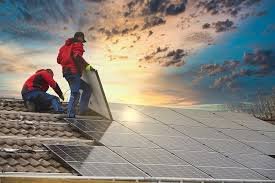
Many people believe solar panels stop working when clouds appear.
However, this idea is not true.
Solar energy systems continue producing power even on cloudy days.
Understanding this process builds trust in solar technology.
Above all, it helps homeowners make confident energy decisions.
Cloudy weather is common in many regions.
Therefore, solar panels are designed to handle these conditions.
In this article, you will learn how solar panels generate power on cloudy days.
You will also discover why they remain reliable and efficient.
Understanding How Solar Panels Work
Solar panels convert sunlight into usable electricity.
They rely on photovoltaic, or PV, cells.
These cells are usually made from silicon.
When light hits the cells, electrons start moving.
As a result, electrical current is created.
Sunlight does not need to be direct or intense.
Instead, panels can use both direct and diffused light.
Diffused light passes through clouds and scatters in the sky.
Therefore, solar panels can still capture energy.
This is the key to cloudy-day performance.
What Happens to Sunlight on Cloudy Days?
Clouds block part of the sunlight.
However, they do not block all light.
Some sunlight passes through thin clouds.
Meanwhile, thicker clouds scatter light in many directions.
Solar panels are built to absorb this scattered light.
In contrast to popular belief, total darkness is rare.
Even overcast skies provide usable solar radiation.
For instance, daylight remains visible during storms.
That light still contains energy for solar panels.
How Solar Panels Generate Power on Cloudy Days
Solar panels generate power on cloudy days by using diffused sunlight.
This sunlight spreads across the sky instead of shining directly.
PV cells absorb this light from multiple angles.
As a result, electricity production continues.
However, output is lower than on sunny days.
Cloud cover can reduce efficiency by 10% to 70%.
The exact reduction depends on cloud thickness.
Thin clouds allow more light through.
Thick storm clouds reduce output more.
In addition, modern solar panels are highly sensitive.
They can capture low-light conditions efficiently.
Therefore, cloudy weather does not stop energy production.
It only slows it temporarily.
Types of Solar Panels and Cloudy Performance
Different solar panels perform differently in cloudy weather.
Choosing the right type matters.
Below are common types and how they compare.
Monocrystalline Solar Panels
These panels are made from pure silicon.
They are highly efficient and durable.
They perform well in low-light conditions.
Therefore, they are ideal for cloudy regions.
Polycrystalline Solar Panels
These panels use mixed silicon crystals.
They are slightly less efficient.
However, they still generate power on cloudy days.
They are also more affordable.
Thin-Film Solar Panels
These panels are lightweight and flexible.
They perform better in diffused light.
However, overall efficiency is lower.
They are often used for large installations.
Key Components That Help in Cloudy Weather
Several components improve solar performance on cloudy days.
Each part plays an important role.
- Photovoltaic cells: Capture diffused sunlight
- Inverters: Convert DC power to usable AC power
- Charge controllers: Protect batteries from overload
- Batteries: Store excess energy for later use
In addition, smart inverters adjust to changing light levels.
They maximize output during low sunlight.
Therefore, system design matters greatly.
Quality components ensure steady energy production.
Why Solar Power Still Matters in Cloudy Regions
Some countries with frequent clouds lead in solar adoption.
For example, Germany uses solar power extensively.
Despite cloudy weather, it produces large solar output.
This proves solar power remains effective.
Cloudy regions benefit from cooler temperatures.
Solar panels work better in cooler conditions.
Heat can reduce efficiency on sunny days.
Therefore, clouds sometimes help balance performance.
In short, location does not limit solar potential.
Proper system sizing ensures enough energy year-round.
Clouds reduce output, but not reliability.
Practical Tips to Improve Solar Performance on Cloudy Days
You can take steps to maximize energy production.
Small adjustments make a big difference.
Below are helpful tips.
- Install high-efficiency panels
- Keep panels clean and debris-free
- Optimize panel angle and direction
- Use battery storage systems
- Monitor system performance regularly
Additionally, trimming nearby trees helps.
Shadows reduce output more than clouds.
Therefore, clear exposure is important.
Maintenance ensures long-term efficiency.
Real-Life Example: A Cloudy Day Scenario
Imagine a home in a cloudy coastal city.
The sky is overcast most mornings.
However, the solar system still produces power.
By midday, diffused light increases output.
The homeowner uses stored energy from batteries.
Meanwhile, the panels keep charging slowly.
In the evening, stored power runs appliances.
As a result, grid dependence stays low.
This example shows real-world reliability.
Solar panels generate power on cloudy days consistently.
They support daily energy needs effectively.
Benefits of Solar Panels Beyond Sunny Days
Solar energy offers more than peak sunlight savings.
Its benefits extend throughout the year.
- Reduced electricity bills
- Lower carbon footprint
- Energy independence
- Increased property value
- Long-term cost savings
Furthermore, incentives and tax credits help.
These benefits apply regardless of weather.
Therefore, solar remains a smart investment.
Cloudy days do not erase these advantages.
Common Myths About Solar and Clouds
Many myths still exist about solar energy.
Clearing them helps informed decisions.
- Myth: Solar panels stop working in clouds
- Fact: They still generate power
- Myth: Cloudy regions cannot use solar
- Fact: Many do successfully
- Myth: Batteries are optional
- Fact: They improve cloudy-day reliability
Understanding facts builds confidence.
Accurate knowledge encourages adoption.
Conclusion
Solar panels generate power on cloudy days using diffused sunlight.
Clouds reduce output but do not stop production.
Modern technology ensures reliable performance.
Proper design and components maximize efficiency.
Cloudy weather should not discourage solar adoption.
Instead, it highlights system resilience.
Solar energy remains clean, reliable, and practical.
It works across seasons and conditions.
Final Thought
Clouds may soften the sun, but not its power.
Solar panels prove this every day.
Consider solar energy with confidence.
Above all, think long-term and sustainable.