Solar power systems are becoming more common in homes and businesses. Many people install solar panels to reduce electricity costs and enjoy reliable power. However, solar panels alone cannot run your appliances.
This is where the inverter becomes important. A solar inverter converts the electricity produced by solar panels into power your home can use. Understanding the types of solar inverters explained simply helps you choose the right system for your needs.
Different solar systems use different inverter types. Each type has its own features, advantages, and best uses. Learning the basics makes solar technology easier to understand.
What Is a Solar Inverter?
A solar inverter is a device that converts electricity from solar panels into usable power. Solar panels produce direct current (DC) electricity. However, homes and appliances use alternating current (AC) electricity.
Therefore, the inverter converts DC electricity into AC electricity. As a result, the power becomes suitable for household appliances.
In addition, modern inverters also perform other tasks, such as:
- Monitoring solar energy production
- Managing battery charging
- Protecting the system from faults
- Controlling power flow in the system
Without an inverter, solar energy cannot power most homes or businesses.
Why Understanding Solar Inverter Types Matters
Choosing the right inverter is very important. Different solar systems require different inverter designs.
For example, some homes use batteries for backup power. Meanwhile, others only use solar panels during the day.
Therefore, understanding the types of solar inverters explained simply helps users select the best option for their solar system.
1. String Inverters
String inverters are the most common type of solar inverter. They are widely used in residential solar systems.
In this system, several solar panels connect together in a series. This group of panels is called a string.
How String Inverters Work
All the panels in the string send electricity to one central inverter. The inverter then converts the power into usable AC electricity.
Advantages of String Inverters
- Lower installation cost
- Simple system design
- Easy maintenance
- Reliable technology
However, shading on one panel may affect the entire string. For example, if one panel receives less sunlight, the overall power output may drop.
2. Hybrid Inverters
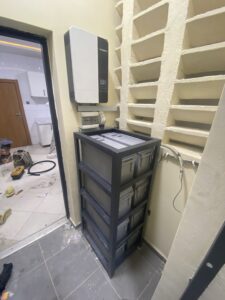
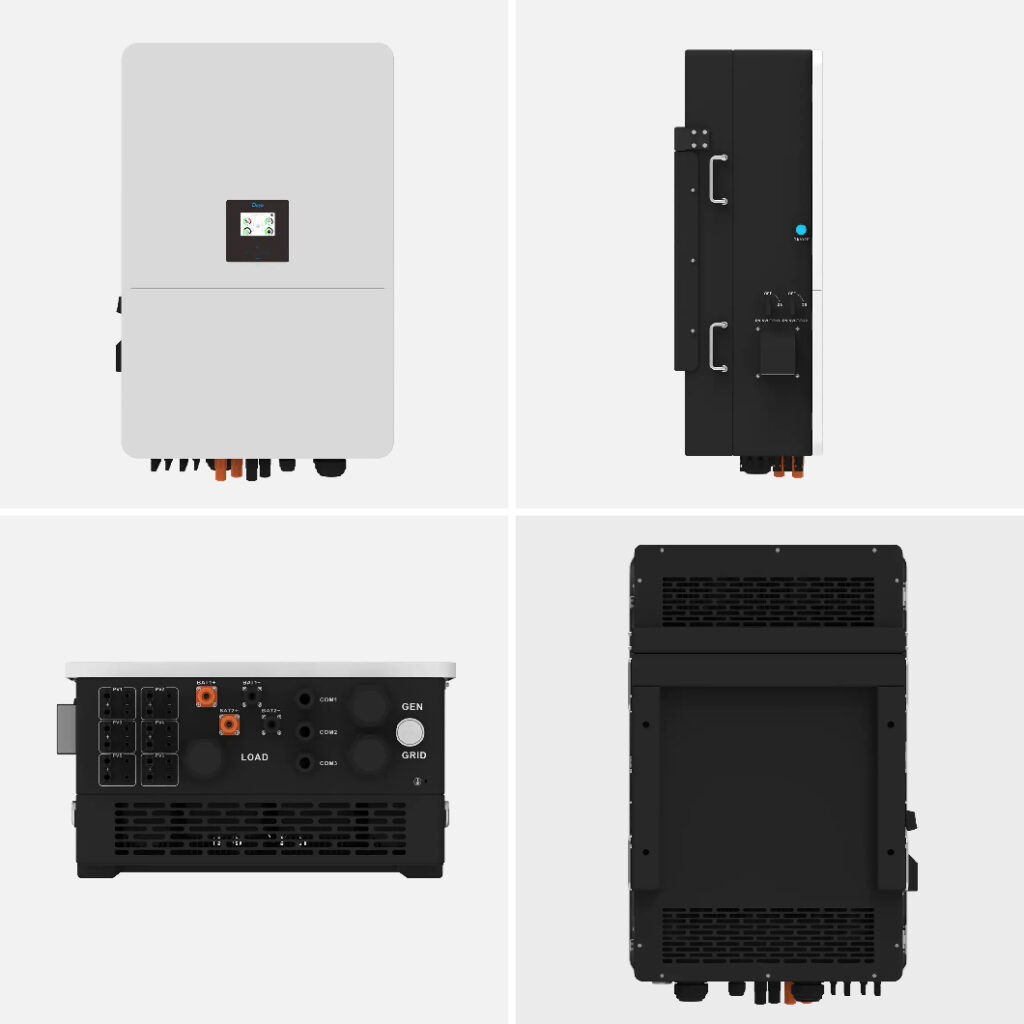
Hybrid inverters are becoming very popular. They are designed for solar systems that include batteries.
These inverters can manage power from solar panels, batteries, and the electrical grid.
Key Features of Hybrid Inverters
Hybrid inverters provide several benefits.
- Charge solar batteries
- Store excess solar energy
- Supply backup power during outages
- Manage energy efficiently
For example, during the day solar panels power the home. Meanwhile, extra electricity charges the battery. At night, the battery provides power.
As a result, hybrid systems provide more energy independence.
3. Off-Grid Inverters
Off-grid inverters are designed for locations without utility electricity.
These systems rely completely on solar panels and batteries.
Where Off-Grid Systems Are Used
Off-grid solar systems are commonly used in:
- Rural homes
- Remote villages
- Farms
- Construction sites
- Telecommunications towers
In these systems, batteries store electricity during the day. Then the inverter supplies power at night or during cloudy weather.
Therefore, off-grid inverters are essential for independent solar systems.
4. Microinverters
Microinverters work differently from other solar inverters.
Instead of using one central inverter, each solar panel has its own inverter.
How Microinverters Work
Each panel converts its electricity individually. Therefore, the performance of one panel does not affect the others.
Benefits of Microinverters
Microinverters offer several advantages.
- Higher efficiency in shaded areas
- Independent panel performance
- Better energy monitoring
- Improved system reliability
However, microinverters are usually more expensive than string inverters.
5. Power Optimizer Systems
Power optimizers are sometimes confused with microinverters. However, they work slightly differently.
In this system, a small device is attached to each solar panel. This device improves the panel’s performance.
However, the electricity still goes to a central inverter for conversion.
Benefits of Power Optimizers
- Improved performance in partial shading
- Better panel monitoring
- Increased system efficiency
Therefore, power optimizer systems combine some benefits of string inverters and microinverters.
How to Choose the Right Solar Inverter
Choosing the right inverter depends on several factors.
Consider the following before making a decision.
1. System Size
Large solar systems may require stronger or multiple inverters.
2. Battery Requirements
If you want battery storage, choose a hybrid inverter.
3. Budget
Different inverter types have different costs.
For example:
- String inverters are usually cheaper
- Microinverters are more expensive
4. Roof Conditions
If your roof has shading issues, microinverters or optimizers may perform better.
Practical Example
Imagine a home installing a rooftop solar system.
The owner installs ten solar panels. If the system uses a string inverter, all panels connect to one central device.
However, if the system uses microinverters, each panel works independently.
As a result, shading on one panel will not affect the others.
This example shows how the types of solar inverters explained simply can affect system performance.
Tips for Maintaining Solar Inverters
Solar inverters are reliable devices. However, proper care improves their lifespan.
Follow these simple tips:
- Install in a cool, dry location
- Ensure proper ventilation
- Check connections regularly
- Monitor system performance
- Use professional installation
Proper maintenance helps ensure stable solar power production.
Conclusion
Solar inverters are essential parts of every solar power system. They convert solar electricity into usable energy for homes and businesses.
Understanding the types of solar inverters explained simply helps users choose the right system. Common types include string inverters, hybrid inverters, off-grid inverters, microinverters, and power optimizer systems.
Each type has unique benefits depending on the system design, budget, and energy needs.
With the right inverter, solar systems become more efficient, reliable, and capable of powering modern homes.
Final Thought
Solar technology continues to improve every year. Choosing the right inverter ensures your solar system performs efficiently and provides reliable power for many years.