Heavy machinery drives modern industry.
Excavators, cranes, and crushers build our world.
However, these machines consume massive energy.
Therefore, many ask an important question.
Can solar systems power heavy machinery?
This topic matters more each year.
Fuel prices rise, and emissions increase.
Meanwhile, solar technology keeps improving.
As a result, clean power attracts serious attention.
In short, solar may change heavy operations forever.
Understanding Heavy Machinery Power Needs
Heavy machinery needs consistent, high power.
Most machines rely on diesel engines today.
These engines deliver torque and reliability.
However, they also create noise and pollution.
In contrast, solar offers quiet, clean energy.
Power demands vary by equipment type.
Some machines run continuously for hours.
Others operate in short, intense cycles.
Therefore, matching power supply is crucial.
Above all, reliability remains the key concern.
What Are Solar Power Systems?
Solar power systems convert sunlight into electricity.
They use photovoltaic panels for energy capture.
In addition, inverters convert DC to AC power.
Batteries store excess energy for later use.
Finally, controllers manage the entire system.
Modern systems are highly scalable.
They can power homes or industrial sites.
Furthermore, hybrid systems combine solar with generators.
This setup improves reliability and output.
As a result, heavy machinery becomes more feasible.
Types of Solar Systems Used for Heavy Equipment
Grid-Tied Solar Systems
Grid-tied systems connect to public electricity.
They supply power during daylight hours.
At night, machines draw grid electricity.
However, remote sites lack grid access.
Therefore, grid-tied systems have limited use.
Off-Grid Solar Systems
Off-grid systems operate independently.
They rely on solar panels and batteries.
These systems suit mines and remote sites.
However, they require careful planning.
Battery capacity becomes extremely important.
Hybrid Solar Systems
Hybrid systems combine solar and generators.
They balance clean energy and reliability.
For instance, solar runs daytime operations.
Generators support peak or night loads.
As a result, fuel use drops significantly.
Can Solar Systems Truly Power Heavy Machinery?
The short answer is yes, sometimes.
However, conditions must be right.
Solar can power electric or hybrid machines.
Diesel-only machines need modifications.
Therefore, compatibility matters greatly.
Solar works best with electric machinery.
Electric excavators already exist today.
Similarly, electric forklifts use solar charging.
Meanwhile, battery technology keeps advancing.
Consequently, heavy solar-powered machines grow realistic.
Real-World Examples and Use Cases
Solar-powered mining sites already operate.
They use hybrid solar-diesel systems.
For example, Australian mines use large solar farms.
Fuel savings reach millions annually.
Emissions also drop significantly.
Construction sites use mobile solar trailers.
These power compressors and welding tools.
In addition, cranes use solar-assisted systems.
Ports use solar-powered gantry cranes.
Therefore, adoption continues across industries.
Benefits of Solar Power for Heavy Machinery
Solar offers clear advantages.
These benefits attract industry leaders.
- Lower fuel and operating costs
- Reduced carbon emissions
- Less noise pollution
- Improved energy independence
- Long-term cost stability
Furthermore, solar improves corporate sustainability goals.
It also supports regulatory compliance.
In contrast, fossil fuels face tighter rules.
As a result, solar gains strategic value.
Above all, it future-proofs operations.
Key Challenges to Consider
Solar has limitations.
Understanding them prevents costly mistakes.
- High upfront installation costs
- Large space requirements
- Weather-dependent energy generation
- Battery weight and lifespan concerns
However, technology improves each year.
Panel efficiency continues to rise.
Battery prices keep falling steadily.
Consequently, challenges become manageable.
Planning remains the decisive factor.
Best Practices for Using Solar with Heavy Machinery
Start with an energy audit.
Know exactly how much power you need.
Then, choose the correct system size.
Oversizing wastes money and space.
Undersizing causes downtime and frustration.
Use hybrid systems for reliability.
Combine solar with generators or grid power.
Additionally, invest in quality batteries.
Maintenance ensures long-term performance.
Finally, train staff on system operation.
Safety and Operational Considerations
Safety always comes first.
High-voltage systems require proper handling.
Install certified equipment only.
Follow local electrical regulations strictly.
Regular inspections reduce risks significantly.
Protect panels from physical damage.
Heavy machinery environments are harsh.
Dust, debris, and vibration cause wear.
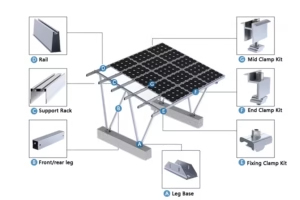
Therefore, robust mounting systems matter.
Routine cleaning also improves efficiency.
The Future of Solar-Powered Heavy Machinery
The future looks promising.
Electric machinery adoption is accelerating.
Solar supports this transition perfectly.
Meanwhile, smart energy management improves efficiency.
AI systems optimize power usage automatically.
Governments support renewable energy adoption.
Subsidies and incentives reduce costs.
In addition, corporate pressure drives sustainability.
Customers prefer green operations.
Therefore, solar adoption will expand rapidly.
Conclusion
So, can solar systems power heavy machinery?
Yes, under the right conditions.
Solar works best with electric or hybrid machines.
Hybrid systems offer flexibility and reliability.
Careful planning ensures successful implementation.
Solar will not replace diesel overnight.
However, it reduces dependence significantly.
Fuel savings and emission cuts add value.
As technology advances, limits shrink further.
In short, solar is becoming a serious solution.
Final Thought
Heavy machinery shapes our future.
How we power it matters deeply.
Solar offers cleaner, smarter energy choices.
Now is the time to explore options.
Sustainable power starts with informed decisions.