
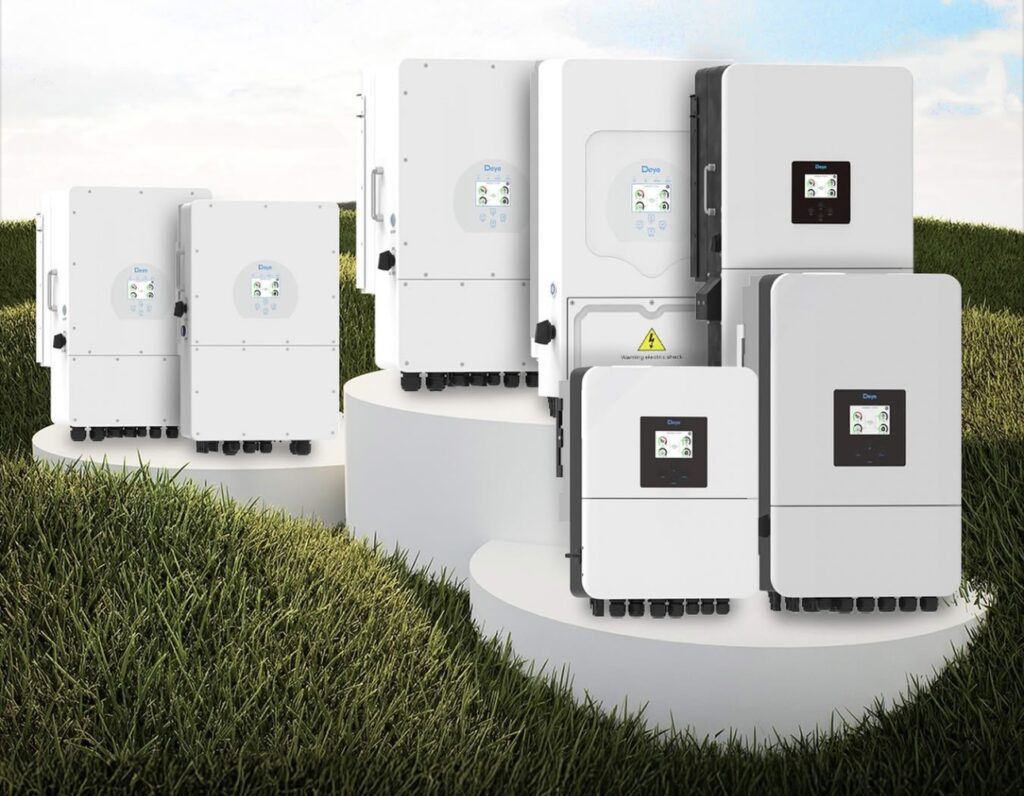
A solar system is only as good as its inverter. Many people focus heavily on solar panels and batteries. However, the inverter plays one of the biggest roles in system performance.
Choosing the wrong inverter capacity can create serious problems. Your appliances may not work properly. In addition, the inverter may overload frequently.
That is why choosing the right inverter capacity is very important. It helps your system run smoothly and efficiently.
This guide explains everything clearly and simply. Therefore, you will understand how to choose the right inverter for your home or business.
What Is an Inverter?
An inverter is a device that converts direct current (DC) into alternating current (AC).
Solar panels and batteries produce DC electricity. However, most appliances use AC electricity.
Therefore, the inverter makes solar energy usable inside your home.
Why Inverter Capacity Matters
Inverter capacity determines how much power your system can handle at once.
If the inverter is too small, it may overload. On the other hand, an oversized inverter may increase costs unnecessarily.
Problems of Wrong Inverter Sizing
- Frequent shutdowns
- Appliance damage
- Reduced system efficiency
- Poor battery performance
As a result, proper sizing is essential for reliable power.
Understanding Inverter Capacity
Inverter capacity is usually measured in:
- VA (Volt-Amps)
- kVA (Kilovolt-Amps)
For example:
- 1kVA inverter
- 3.5kVA inverter
- 5kVA inverter
The higher the rating, the more appliances it can support.
Step 1: List Your Appliances
The first step is knowing what you want to power.
Write down all appliances you use daily.
Common Household Appliances
- Bulbs
- Fans
- Television
- Refrigerator
- Freezer
- Air conditioner
- Washing machine
Therefore, your inverter size depends on your energy needs.
Step 2: Check Appliance Wattage
Every appliance consumes power differently.
For example:
| Appliance | Average Wattage |
|---|---|
| LED Bulb | 10W |
| Fan | 75W |
| Television | 120W |
| Refrigerator | 200W |
| Air Conditioner | 1500W |
Add the total wattage of appliances you want to run simultaneously.
As a result, you estimate your required inverter capacity.
Step 3: Consider Starting Surge
Some appliances require extra power when starting.
This is called surge power.
Appliances With High Starting Surge
- Refrigerators
- Freezers
- Air conditioners
- Water pumps
Therefore, your inverter must handle both running and starting loads.
Step 4: Plan for Future Expansion
Many homeowners expand their systems later.
You may add:
- More appliances
- Extra batteries
- Additional solar panels
Therefore, choosing a slightly larger inverter can save future upgrade costs.
Common Inverter Sizes and Their Uses
Different inverter capacities suit different needs.
1kVA Inverter
Suitable for:
- Small apartments
- Basic lighting
- Television and fans
Can Power
- LED bulbs
- Small TV
- Fan
- Phone charging
However, it cannot support heavy appliances.
2.5kVA to 3.5kVA Inverter
Suitable for medium homes.
Can Power
- Fans
- TVs
- Refrigerator
- Lighting
- Small office equipment
Therefore, this size is very popular in Nigeria.
5kVA Inverter
Suitable for larger homes and businesses.
Can Power
- Multiple refrigerators
- Air conditioners
- Office equipment
- Larger appliances
As a result, it offers stronger backup power.
10kVA and Above
Ideal for:
- Large businesses
- Factories
- Commercial buildings
These systems support heavy equipment and continuous operations.
Types of Solar Inverters
Choosing the right inverter type also matters.
Hybrid Inverter
Hybrid inverters work with:
- Solar panels
- Batteries
- Public electricity
They are flexible and highly efficient.
Therefore, many Nigerian homes prefer hybrid systems.
Off-Grid Inverter
Off-grid inverters work independently from public electricity.
They rely fully on solar panels and batteries.
As a result, they are ideal for remote areas.
Pure Sine Wave vs Modified Sine Wave
This is another important consideration.
Pure Sine Wave Inverter
- Safer for electronics
- Better appliance performance
- Recommended for homes
Modified Sine Wave Inverter
- Cheaper option
- Limited compatibility
- Less efficient
Therefore, pure sine wave inverters are usually the better choice.
Real-Life Example
Imagine a family in Abuja.
They want to power:
- 15 bulbs
- 4 fans
- 2 televisions
- 1 refrigerator
Their estimated load fits well within a 3.5kVA inverter system.
However, if they plan to add air conditioners later, a 5kVA inverter may be wiser.
Therefore, future planning matters.
Common Mistakes When Choosing Inverter Capacity
Many people make avoidable mistakes.
Common Errors
- Choosing based on price only
- Ignoring starting surge
- Overloading the inverter
- Buying fake products
As a result, system performance suffers
Practical Tips for Choosing the Right Inverter
Choosing correctly requires proper planning.
Helpful Tips
- Calculate your total load carefully
- Consider future upgrades
- Choose quality brands
- Work with experienced installers
Above all, avoid guesswork.
Importance of Professional Assessment
Every home is different.
Professional solar experts evaluate:
- Energy usage
- Appliance load
- Battery requirements
- Solar panel compatibility
Therefore, expert guidance improves system performance and safety.
Why Choose Jeho Ashar Energy?
At Jeho Ashar Energy, we help customers choose the right inverter capacity based on real energy needs.
What We Offer
- Professional load assessment
- High-quality hybrid inverters
- Expert installation
- Reliable after-sales support
Therefore, you get efficient and dependable solar solutions.
Conclusion
Choosing the right inverter capacity is one of the most important steps in solar installation.
The right inverter improves performance, protects appliances, and ensures reliable power supply.
Therefore, understanding your energy needs before buying is essential.
Final Thought
Do not choose an inverter blindly. A properly sized inverter keeps your home comfortable, efficient, and ready for future energy needs.
It’s surprising how often inverter size gets overlooked when setting up a solar system. This guide really clarifies why calculating your household’s power needs is essential to avoid overloads or inefficiencies. Understanding capacity upfront seems like such a simple step, but it can make a big difference in system performance.