
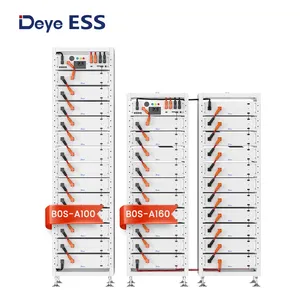
Solar energy needs can change over time. Your electricity usage may increase. You may also need longer backup periods. Consequently, your original battery capacity may become insufficient.
This raises an important question: Can you add more batteries later?
In many solar systems, the answer is yes. However, adding batteries is not always as simple. Compatibility, battery age, inverter capacity, and system design matter.
Therefore, proper planning is essential before expanding. A well-designed system can support future battery expansion. This approach can also reduce unnecessary replacement costs.
This guide explains how battery expansion works. It also covers important considerations for lithium battery systems.
Can You Add More Batteries Later?
Yes, many solar systems support battery expansion.
Modern lithium batteries are often designed for modular installations. This allows additional battery units to be connected later.
However, expansion depends on the specific battery model. The inverter must also support the increased capacity.
Before adding batteries, check:
- Battery compatibility
- Inverter capacity
- Battery communication
- Maximum battery quantity
- Cable requirements
- Protection requirements
- Manufacturer recommendations
Therefore, never add batteries without checking specifications first.
Why Would You Need More Batteries?
Energy needs can increase for several reasons.
For example, a homeowner may purchase new appliances. A business may extend its operating hours. Alternatively, the user may simply need longer backup.
Common reasons include:
- Increased electricity consumption
- Longer backup requirements
- More appliances
- Business expansion
- Additional solar panels
- Reduced generator dependence
- Future energy planning
For instance, you may initially install a 10kWh battery. Later, your energy demand may require 20kWh.
Adding another battery could increase available storage.
How Does Battery Expansion Work?
Battery expansion involves connecting additional batteries. These batteries typically operate as a larger battery bank.
For example, imagine two compatible 10kWh batteries.
When connected correctly, they can provide approximately 20kWh of rated storage capacity.
However, the exact usable capacity depends on several factors. These include battery settings, DoD, inverter limitations, and manufacturer specifications.
Therefore, capacity should always be calculated professionally.
Can You Add Lithium Batteries to an Existing System?
Yes, but compatibility is extremely important.
Lithium batteries communicate with compatible inverters. They may use communication protocols such as CAN or RS485.
This communication helps coordinate:
- Charging
- Discharging
- Battery protection
- State of charge
- Current limits
- Battery alarms
Therefore, the new battery must communicate properly with the existing system.
A battery that physically connects may still be electrically incompatible.
Can You Mix Different Battery Brands?
Generally, mixing different battery brands is not recommended.
Different batteries can have different:
- Voltage characteristics
- BMS settings
- Charging requirements
- Communication protocols
- Capacity ratings
- Protection limits
Consequently, mixing batteries can create compatibility problems.
For reliable expansion, use batteries approved for that system.
Ideally, additional batteries should match the existing model.
Can You Add an Older Battery With a New Battery?
This requires particular caution.
Battery age can affect internal resistance and performance. An older battery may behave differently from a new battery.
For example, imagine an existing battery has several years of usage. You then connect a brand-new battery.
The newer battery may have different capacity and performance characteristics.
As a result, the batteries may not share energy equally.
Therefore, manufacturers often recommend adding batteries within specific age or usage conditions.
Always check the manufacturer’s expansion requirements.
Why Battery Age Matters
Battery cells gradually degrade with use.
As batteries age, their available capacity can decrease. Their charging and discharging characteristics can also change.
Therefore, two batteries with identical labels may perform differently.
For battery expansion, matching battery age can be beneficial.
If expansion is planned from the beginning, consider purchasing compatible batteries together.
This can make future expansion easier.
Can Deye Lithium Batteries Be Expanded?
Many Deye lithium battery systems are designed around modular storage. Depending on the specific model, multiple batteries can be connected to increase storage capacity.
However, maximum battery quantities vary by model.
Therefore, you should always check the exact Deye battery specifications.
For example, a Deye battery designed for modular operation may support parallel connections. The inverter must also support the intended battery configuration.
Proper communication and configuration remain essential.
Can You Add More Batteries Without Changing the Inverter?
Sometimes, yes.
It depends on the inverter’s specifications.
Your inverter has limits for battery voltage and current. Adding batteries increases available storage capacity. However, it does not necessarily increase the inverter’s AC output power.
For example, adding more batteries can provide longer backup. It does not automatically make a 10kW inverter produce 20kW.
This distinction is important.
Battery capacity and inverter power are different things.
A larger battery bank provides more stored energy. A larger inverter provides greater load-handling capability.
What Happens to Backup Time?
Adding batteries can increase backup duration.
Consider a simple example.
A household uses approximately 2kW continuously. A 10kWh battery may provide several hours of usable energy.
Adding another compatible 10kWh battery increases total storage.
Therefore, the system can potentially run longer.
However, actual backup time depends on:
- Battery usable capacity
- Load size
- Inverter efficiency
- Depth of discharge
- Appliance usage
- Battery condition
Consequently, adding batteries does not guarantee a fixed number of extra hours.
Battery Capacity vs Inverter Capacity
This difference deserves attention.
Suppose you have a 15kW inverter. You may be able to add more battery capacity without replacing that inverter.
The inverter still supplies the same maximum AC output.
However, the larger battery bank can provide energy for longer.
For example:
10kWh battery → shorter backup
20kWh battery → longer backup
The inverter power remains unchanged.
Therefore, battery expansion is useful when backup duration is the main concern.
What About Solar Panels?
Adding batteries can also change how you use solar energy.
A larger battery can store more daytime solar production. This energy can then be used during evenings.
For example, excess solar production might otherwise be unused. A larger battery bank can capture more of that available energy.
However, you need enough solar generation to charge the additional capacity.
Therefore, battery expansion should consider your solar panel capacity too.
Do You Need More Solar Panels?
Not always.
If your existing solar array already produces enough energy, additional batteries may be sufficient.
However, if the new battery bank is rarely fully charged, additional solar generation could help.
Consider:
- Existing panel capacity
- Daily solar production
- Battery capacity
- Daily electricity usage
- Weather conditions
- Charging time
Consequently, the complete system should be evaluated.
What Protection Is Needed?
Battery expansion requires appropriate protection.
Additional batteries may increase available fault current. Therefore, electrical protection must be correctly designed.
Depending on the system, this may involve:
- DC breakers
- Fuses
- Isolators
- Correctly sized cables
- Proper connectors
- Battery protection systems
Never improvise battery wiring.
Professional installation is strongly recommended.
Why Cable Sizing Matters
Adding batteries can change current requirements.
Incorrect cable sizing can create voltage drops. It can also produce unnecessary heat.
Therefore, cables should match the system’s electrical requirements.
Battery connections should also be properly balanced.
Poor connection methods can cause one battery to work harder than another.
As a result, proper wiring is essential for reliable operation.
What Should You Check Before Expanding?
Before adding batteries, follow these steps.
1. Check Your Battery Model
Confirm the exact battery model.
Check whether it supports parallel expansion.
2. Check Your Inverter
Confirm the inverter’s supported battery configuration.
Also check its maximum battery voltage and current.
3. Check Communication Compatibility
Ensure the BMS can communicate correctly.
This is especially important for lithium systems.
4. Check Battery Age
Determine how old your existing batteries are.
Consider whether the manufacturer permits expansion.
5. Calculate Your New Capacity
Determine how much additional storage you need.
Avoid buying capacity without understanding your actual demand.
6. Review Protection Requirements
Additional batteries may require changes.
Your installer should review cables and protection equipment.
7. Use a Qualified Installer
Battery expansion should be professionally configured.
This helps protect both equipment and users.
Common Mistakes When Adding Batteries
Several mistakes can cause problems.
Mixing Incompatible Batteries
Different batteries may not communicate correctly.
Ignoring Battery Age
Older batteries may perform differently.
Exceeding Inverter Limits
More batteries do not mean unlimited capacity.
Poor Cable Sizing
Incorrect cables can create serious electrical problems.
Ignoring Manufacturer Requirements
Every battery system has specific limits.
Therefore, always follow the manufacturer’s instructions.
Planning Battery Expansion From Day One
The best time to plan expansion is before installation.
Tell your solar installer about future energy needs.
For example, you may initially need 10kWh. However, you might expect your consumption to increase later.
Your installer can then design a scalable system.
This could include:
- Modular batteries
- Expandable inverter systems
- Suitable cable routes
- Appropriate protection
- Additional installation space
Consequently, future expansion can become easier and cheaper.
Why Choose Jeho Ashar Energy?
Battery expansion requires more than additional battery units. It requires proper system planning and compatible equipment.
Jeho Ashar Energy supplies Deye lithium batteries, Deye inverters, genuine Jinko solar panels, cables, protection devices, and other solar components.
These products can support residential, commercial, and industrial solar systems.
Furthermore, proper system sizing helps ensure future expansion remains practical.
If you are planning a new solar system, discuss future energy requirements early. You can explore quality solar solutions at https://www.abujasolar.com.
Conclusion
So, can you add more batteries later?
In many cases, yes. Modern lithium battery systems can provide scalable energy storage. However, expansion must follow compatibility and manufacturer requirements.
Battery age, inverter capacity, communication, wiring, and protection all matter.
Therefore, never connect additional batteries casually. First, confirm that the existing system supports expansion.
A properly planned battery bank can grow with your energy needs. This can provide longer backup and better long-term value.
Final Thought
Your energy needs may change over time. Therefore, your solar system should have room to grow.
Plan for tomorrow while installing today.
Learn more about quality solar solutions at https://www.abujasolar.com
บทความดีมาก สร้างเพลงเต็มเพลงจากประโยคเดียวด้วย AI ที่ Happy Shrimp: / Happy Shrimp
Great walkthrough of adding a second battery. I used qwen-image 2.1 to sketch the wiring layout before drilling anything and it helped a lot.
Useful guide. For the labels on my battery bank I used Qwen Image 3.1 and the printed diagram was easy to read even in the dark.
Thanks for the detail on inverter limits. I made the instruction sheet for my installer with Hy Image 3.5 and it saved a lot of back and forth.
Good article, the part about matching battery voltage is important. I cleaned up the photos of my setup with laya model before sharing them with the technician.
Nice overview. Off topic, but I recorded a short clip of the installation with kling 4.0 and it was easy to get a clean edit.
Great walkthrough of adding a second battery. I used qwen-image 2.1 to sketch the wiring layout before drilling anything and it helped a lot.
The write-up is more careful than most coverage of the subject, and that is what makes the detail worth reading.
I agree with most of this, though I would add that the first attempt is usually the slowest and that is normal. Once the routine settles, the same job takes half the time. Good to see it written down plainly.
Useful. Adding storage rarely helps if the inverter caps the charge rate, and that is worth saying plainly.
Solid advice. Expanding in the same chemistry as the existing bank is what keeps the whole system balanced.
Nice write-up. Sizing the battery to the evening load rather than to the panel array is the right way round.
I didn’t realize the inverter could limit how much battery you can add later. We’re planning a system with a 10kWh battery and I assumed doubling it would just be a matter of buying another unit. Checking compatibility and communication between the old and new batteries seems like the part people overlook most.
Useful guide. The note about matching the new battery to the existing inverter is the part that saves people money.
Solid walkthrough. The point about matching battery capacity to actual evening consumption is the one people skip – adding storage without measuring the load curve just moves the bottleneck to the inverter.
Solid walkthrough. Matching battery capacity to evening consumption is the step most people skip – adding storage without measuring the load curve just moves the bottleneck to the inverter.
Solid walkthrough. Matching storage to the evening load curve is the step people skip – adding batteries without measuring consumption just moves the bottleneck to the inverter.
I read this because our backup time stopped covering the evening, but I hadn’t thought about the battery age matching issue. We installed 10kWh and now I’m looking at doubling it, so the point about the inverter capacity and communication checks is what I needed. I’ll confirm the model and manufacturer specs before buying anything.
I added panels last year but kept the same battery, and now the evening backup doesn’t last like it used to. The part about matching battery age and checking the inverter’s maximum capacity made me realize I can’t just buy another unit of the same model. My installer never explained the communication and cable requirements either.
Useful guide. What usually decides whether an extra battery is worth it is the depth of discharge you actually run and how often, more than the headline capacity.
Helpful explanation. Being realistic about how deep you actually cycle the bank matters more than the nameplate capacity, since that is what drives the real service life.
Thanks for the detailed write-up on Checking your browser before accessing. Just a moment…. The practical points are the ones I keep coming back to.
Useful article. The part about Checking your browser before accessing. Just a moment… answered a question I had been sitting on for a while.
Well explained. It is refreshing to read something on Checking your browser before accessing. Just a moment… that stays this concrete.
Good read. I liked that the piece on Checking your browser before accessing. Just a moment… gives examples instead of vague advice.
Thanks for sharing this. The notes on Checking your browser before accessing. Just a moment… are the kind of detail that is hard to find elsewhere.
Solid overview of Checking your browser before accessing. Just a moment…. I would happily read a follow-up with more examples.
Thanks for the detailed write-up on Checking your browser before accessing. Just a moment…. The practical points are the ones I keep coming back to.
The mention of inverter capacity being a limit makes me want to double-check my own setup before buying anything. I hadn’t really thought about how the maximum battery quantity is capped by the model itself.
The part about battery compatibility being tied to the specific model is what I keep coming back to, since my own manual doesn’t list a maximum quantity anywhere. I hadn’t really thought about the cable and protection requirements changing too, not just the battery count. Planning for expansion from the start makes more sense than I gave it credit for.
Useful article – the practical details are what make it worth reading.
Good write-up. The examples help make the point clear.
Useful article – the practical details are what make it worth reading.
Good write-up. The examples help make the point clear.
Solid, practical guide – the point about matching battery age and chemistry before expanding is the one people skip, and it is usually what causes trouble a year later. A small operational aside: if you document installations for a project gallery, keeping the photos consistent matters, and PhotoCraft is what I use for it – an open-source photo editor that runs in the browser or as a desktop app on Windows, macOS and Linux, with batch tools for a set of site photos and full-resolution files kept on your own machine.
Thanks for writing this up – useful detail.
Thanks for writing this up – useful detail.
Thanks for writing this up – useful detail.
Useful article – the practical details are what make it worth reading.