
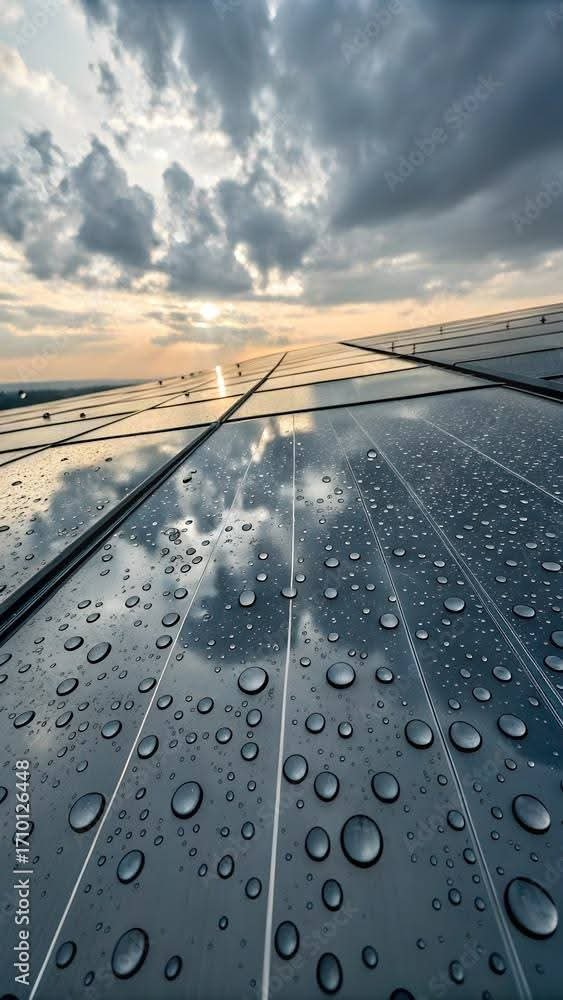
Does Solar Work During Rainy Season?
Rainy season often raises concerns for people considering solar energy. Many homeowners and businesses wonder if their solar systems will continue working when the sun is hidden behind clouds for days.
The good news is that solar panels do not stop working during rainy weather. While power generation may reduce, your system can still produce electricity. In fact, modern solar technology is designed to perform even in less-than-perfect conditions.
Understanding how solar performs during the rainy season can help you make informed decisions and maximize your investment. In this guide, we will explain how solar systems work during wet weather and what you can do to maintain reliable power throughout the year.
How Solar Panels Generate Electricity
Solar panels convert sunlight into electricity using photovoltaic cells.
Many people assume panels need direct sunlight. However, this is not entirely true.
Solar panels can also generate electricity from indirect sunlight. Even when clouds cover the sky, some solar radiation still reaches the panels.
As a result, your solar system continues producing power, although at a lower rate than on bright sunny days.
This is one reason solar energy remains a practical solution across Nigeria, including during long rainy seasons.
Does Solar Work During Rainy Season?
Yes, solar works during rainy season.
However, electricity production is usually lower.
Cloud cover blocks part of the sunlight reaching the panels. Consequently, solar panels receive less energy and generate less electricity.
The exact reduction depends on factors such as:
- Cloud density
- Rain intensity
- Panel quality
- System design
- Battery storage capacity
- Installation angle
For example, light cloud cover may reduce output by only 10% to 25%. On the other hand, heavy storms may temporarily reduce production by 50% or more.
Despite this reduction, your system does not stop functioning.
Why Solar Still Works on Cloudy Days
Sunlight contains different forms of radiation.
Even when direct sunlight is blocked, diffuse sunlight remains available.
Diffuse sunlight scatters through the atmosphere and reaches solar panels from multiple directions.
Modern solar panels are designed to capture both direct and indirect sunlight.
Therefore, they continue generating electricity during cloudy and rainy weather.
Furthermore, high-quality panels often perform better in low-light conditions than cheaper alternatives.
How Batteries Help During Rainy Season
Battery storage plays a major role during periods of reduced sunlight.
When the weather is sunny, excess energy charges the batteries.
Later, during rainy periods, stored energy powers your appliances.
Benefits of batteries during rainy season include:
- Continuous electricity supply
- Reduced generator usage
- Better energy independence
- Improved system reliability
- Lower fuel expenses
As a result, homes with properly sized battery banks enjoy more stable power during prolonged cloudy weather.
What Happens During Several Days of Rain?
A common concern involves extended rainy periods.
What happens if it rains for three or four days?
The answer depends on your system design.
A well-designed solar system considers weather variations and seasonal changes.
Important factors include:
- Battery capacity
- Solar panel size
- Daily energy usage
- Backup power options
For instance, a homeowner using minimal appliances may comfortably survive several cloudy days.
Meanwhile, a business with higher energy demands may require larger battery storage or generator backup.
This is why professional system sizing is essential.
Benefits of Solar During Rainy Season
Many people focus on reduced output. However, solar still provides significant advantages.
Reduced Electricity Costs
Even during cloudy weather, solar continues generating power.
Consequently, you consume less electricity from alternative sources.
Lower Generator Dependence
Fuel costs continue to rise.
Therefore, every unit of solar energy produced helps reduce generator usage.
Battery Charging
Although charging may be slower, batteries still receive energy on many rainy days.
Year-Round Energy Production
Solar is not limited to dry seasons.
Instead, it provides electricity throughout the year.
Common Myths About Solar and Rainy Weather
Myth 1: Solar Panels Stop Working When It Rains
This is false.
Solar panels continue producing electricity during rainy weather.
Output simply decreases.
Myth 2: Rain Damages Solar Panels
Quality solar panels are built for outdoor use.
They are designed to withstand rain, wind, and changing weather conditions.
Myth 3: Solar Is Only Suitable for Sunny Regions
Even countries with frequent cloud cover successfully use solar energy.
Therefore, solar remains effective across various climates.
Rain Can Actually Help Solar Panels
Interestingly, rain offers some benefits.
One major advantage is natural cleaning.
Rainwater helps wash away:
- Dust
- Dirt
- Bird droppings
- Surface debris
Cleaner panels absorb more sunlight.
Consequently, system performance may improve after rainfall.
However, heavy dirt buildup may still require manual cleaning.
How to Improve Solar Performance During Rainy Season
Although weather cannot be controlled, several steps can improve performance.
Install Adequate Battery Storage
Larger battery capacity provides more backup power.
This helps during extended cloudy periods.
Use High-Efficiency Solar Panels
Premium solar panels generally perform better under low-light conditions.
Therefore, investing in quality equipment can deliver better long-term results.
Keep Panels Clean
Dirty panels produce less energy.
Regular cleaning improves sunlight absorption.
Monitor Energy Usage
Reduce unnecessary loads during extended rainy periods.
This helps preserve battery power.
Schedule Professional Maintenance
Routine inspections identify issues before they become serious problems.
You can learn more about professional solar solutions at Abuja Solar Solutions.
Why Proper System Design Matters
Many rainy season complaints stem from poor system design.
An undersized system may struggle during cloudy weather.
Common design mistakes include:
- Insufficient battery storage
- Too few solar panels
- Incorrect inverter sizing
- Poor installation practices
In contrast, a properly designed solar system accounts for seasonal weather variations.
This ensures more consistent performance throughout the year.
At Jeho Ashar Energy, system design focuses on long-term reliability rather than short-term savings.
A Realistic Example
Consider a family living in Abuja.
Their solar system includes:
- 12 solar panels
- Lithium battery storage
- Hybrid inverter
During sunny days, the batteries fully charge.
During rainy periods, production decreases. However, stored energy continues powering lights, fans, televisions, internet devices, and essential appliances.
As a result, the family experiences minimal disruption despite reduced sunlight.
This demonstrates the importance of proper planning and equipment selection.
Conclusion
So, does solar work during rainy season?
Absolutely.
While energy production decreases during cloudy and rainy weather, solar panels continue generating electricity. Furthermore, battery storage helps maintain power availability when sunlight levels are lower.
The key is proper system design. With quality components, adequate battery capacity, and professional installation, solar remains a dependable energy solution throughout the year.
Final Thought
Rainy weather does not stop solar power. It simply changes how much energy is produced. A properly designed solar system can continue delivering reliable electricity even during extended rainy seasons. If you’re planning a solar installation, focus on quality design, proper battery sizing, and professional support for the best results.
For expert solar design, installation, and maintenance services, visit Abuja Solar Official Website.