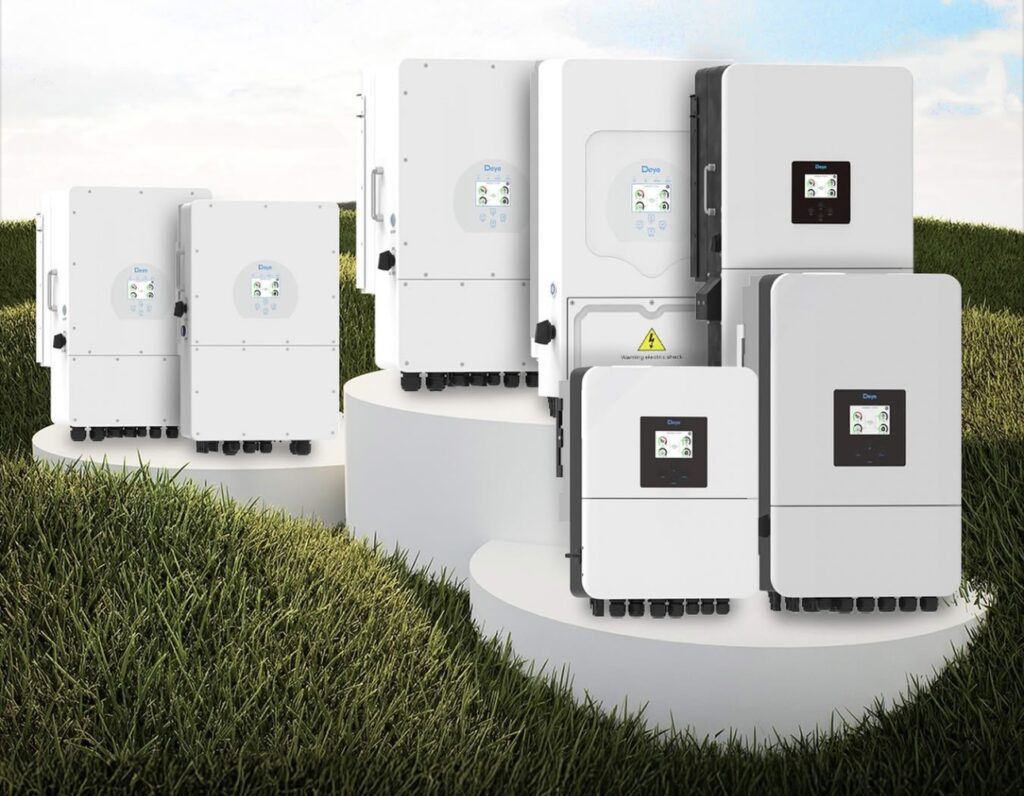
Deye hybrid inverters are among the most reliable solar inverters available today. They are widely used across Nigeria because of their intelligent energy management, high efficiency, and excellent compatibility with lithium batteries. However, like every advanced electronic device, they may occasionally display an error code.
Seeing an error message on your inverter screen can be worrying. Fortunately, most Deye inverter error codes are designed to help identify problems before they become serious. Some warnings are minor and can be resolved quickly, while others require professional inspection.
Understanding these error codes can save time, reduce downtime, and prevent unnecessary damage to your solar system. In this guide, we’ll explain the most common Deye inverter error codes, their possible causes, and the steps you should take when they appear.
At Jeho Ashar Energy, we supply genuine Deye hybrid inverters, premium Jinko solar panels, lithium batteries, and professional installation services. Learn more about our solar solutions at https://www.abujasolar.com.
Why Deye Inverters Display Error Codes
Modern Deye inverters constantly monitor every part of the solar system.
They check:
- Solar panel voltage
- Battery condition
- Grid voltage
- Internal temperature
- Output power
- Communication between devices
Whenever the inverter detects an abnormal condition, it displays an error code. This helps users and technicians identify the issue quickly before it affects the entire system.
Should You Panic When an Error Appears?
The simple answer is no.
Many Deye error codes are temporary warnings rather than serious faults.
For example, a sudden grid voltage fluctuation or a brief communication interruption may trigger an alert that clears automatically.
However, if the same error appears repeatedly or the inverter stops supplying power, you should contact a qualified solar technician.
Common Deye Inverter Error Codes Explained
Although different Deye models may display slightly different codes, the following are among the most common.
1. Grid Voltage Fault
Possible Causes
- High utility voltage
- Low utility voltage
- Unstable public electricity
- Loose AC wiring
What You Can Do
- Wait for grid voltage to stabilize.
- Check AC connections.
- Restart the inverter if appropriate.
- Contact your installer if the problem continues.
This is one of the most common alerts in areas with unstable electricity supply.
2. Grid Frequency Fault
Possible Causes
- Grid frequency outside acceptable limits
- Utility supply instability
Recommended Solution
- Allow the utility supply to normalize.
- Inspect AC wiring.
- Contact your installer if the warning persists.
Fortunately, this issue often disappears once the grid becomes stable.
3. Battery Over Voltage
This warning appears when the battery voltage becomes higher than the inverter’s safe operating range.
Possible Causes
- Incorrect battery settings
- Charging configuration issues
- Battery communication errors
Recommended Action
- Check battery configuration.
- Verify battery communication.
- Allow a qualified technician to inspect charging parameters.
4. Battery Low Voltage
This warning indicates the battery has become deeply discharged.
Common Reasons
- High electricity usage
- Insufficient solar charging
- Poor weather
- Battery aging
Solutions
- Allow the batteries to recharge.
- Reduce heavy electrical loads.
- Inspect battery health.
- Ensure solar panels are producing power.
5. PV Over Voltage
The inverter has detected excessive voltage coming from the solar panels.
Possible Causes
- Incorrect panel wiring
- Too many panels connected in series
- Installation design errors
Important Safety Note
Do not attempt to disconnect solar cables yourself.
High DC voltage can be dangerous.
Always allow qualified technicians to inspect the system.
6. Over Temperature Warning
Like most electronic equipment, inverters generate heat during operation.
If temperatures become excessive, the inverter protects itself by displaying an overheating warning.
Possible Causes
- Poor ventilation
- Direct sunlight
- Blocked cooling vents
- High ambient temperature
Prevention Tips
- Install the inverter in a shaded location.
- Keep ventilation openings clear.
- Avoid enclosing the inverter in small spaces.
- Clean dust from cooling vents regularly.
7. Communication Failure
Modern Deye systems communicate with batteries and monitoring devices.
Communication errors may interrupt this process.
Possible Causes
- Loose communication cables
- Incorrect settings
- Battery communication mismatch
What to Do
- Check communication cable connections.
- Restart the inverter.
- Contact your installer if communication does not return.
8. Insulation Fault
This warning indicates possible insulation problems within the solar array.
Possible Causes
- Damaged cables
- Moisture intrusion
- Poor wiring
- Installation faults
Recommended Action
Stop troubleshooting yourself and contact a qualified solar technician immediately.
Electrical insulation faults require professional attention.
9. Overload Warning
This occurs when connected appliances demand more power than the inverter can safely provide.
Common Causes
- Too many appliances running simultaneously
- Large motors starting together
- Incorrect inverter sizing
Solution
- Turn off unnecessary appliances.
- Reduce heavy electrical loads.
- Upgrade your inverter if required.
Proper system sizing prevents this issue.
10. Fan or Cooling System Fault
Some Deye models include internal cooling fans.
If cooling becomes ineffective, the inverter displays a warning.
Possible Causes
- Dust buildup
- Fan failure
- Mechanical obstruction
Recommended Solution
Schedule professional servicing to inspect and replace faulty cooling components if necessary.
How to Prevent Deye Inverter Errors
Although not every warning can be avoided, proper maintenance significantly reduces the chances of faults.
Good maintenance practices include:
- Cleaning solar panels regularly.
- Keeping the inverter dust-free.
- Maintaining adequate ventilation.
- Checking battery connections.
- Monitoring system performance.
- Scheduling routine professional inspections.
Preventive maintenance is always less expensive than emergency repairs.
When Should You Call a Technician?
Some issues are simple.
Others require professional diagnosis.
Contact your installer immediately if:
- The inverter repeatedly displays the same error.
- Burning smells are present.
- The inverter shuts down completely.
- Battery charging stops.
- Solar production suddenly drops.
- Physical damage is visible.
Never attempt internal repairs unless you are a qualified technician.
Why Professional Installation Matters
Many recurring inverter problems begin during installation.
Incorrect wiring, poor cable sizing, improper grounding, or wrong battery settings can all lead to repeated error codes.
Professional installation helps ensure:
- Correct system sizing.
- Safe electrical connections.
- Proper inverter programming.
- Reliable battery communication.
- Maximum efficiency.
This is why choosing an experienced installer is just as important as choosing a quality inverter.
Why Choose Jeho Ashar Energy?
At Jeho Ashar Energy, we provide complete solar solutions using genuine products and experienced engineering support.
Our services include:
- Genuine Deye Hybrid Inverters
- Premium Jinko Solar Panels
- High-performance Lithium Batteries
- Solar Mounting Systems
- Electrical Protection Devices
- Professional Installation
- Technical Support and Maintenance
Every system is carefully designed to deliver maximum reliability and long-term performance.
Visit https://www.abujasolar.com to explore our complete range of products and professional solar services.
Conclusion
Understanding common Deye inverter error codes helps homeowners identify problems early and keep their solar systems operating efficiently. While many warnings are temporary, others indicate issues that require prompt professional attention.
Fortunately, most problems can be prevented through quality installation, regular maintenance, and the use of genuine solar equipment. By responding to error messages correctly instead of ignoring them, you protect both your inverter and your investment.
If you ever experience repeated Deye inverter errors, always seek assistance from qualified solar professionals rather than attempting risky repairs yourself.
Final Thought
A Deye inverter is designed to protect your solar system. When it displays an error code, it’s giving you valuable information—not just an alarm. Respond early, maintain your system regularly, and enjoy reliable solar power for years to come.
Learn more about quality solar solutions at https://www.abujasolar.com

Ottimo articolo! Video AI: Van Gogh Free AI Video Generator — . Van Gogh Free AI Video Generator