
Battery charging speed matters in every solar system. Nobody wants to wait too long for stored energy. Therefore, many homeowners and businesses ask, “How fast do lithium batteries charge?”
Lithium batteries are known for their fast charging ability. Compared with traditional tubular batteries, they can accept higher charging currents and use solar energy efficiently. As a result, they can recharge faster under suitable conditions.
However, charging speed depends on several factors. Battery capacity, inverter size, solar panel capacity, battery state, and available sunlight all matter. In this guide, we explain lithium battery charging speed and what affects it.
How Fast Do Lithium Batteries Charge?
There is no single charging time for every lithium battery. Different batteries have different capacities and charging limits.
For example, a small lithium battery may recharge within a few hours. A larger battery can require much longer. Furthermore, the available solar power directly affects charging speed.
A simple calculation can provide an estimate.
Charging time = Battery capacity ÷ Charging power
For example, imagine a 10 kWh battery. If it receives 5 kW of charging power, the theoretical charging time is about two hours.
However, real-world charging usually takes longer. Charging losses and battery management controls affect the final time.
Why Lithium Batteries Charge Faster
Lithium batteries have several advantages over traditional lead-acid batteries.
They can generally accept higher charging currents. Consequently, more available energy can enter the battery within a shorter period.
Lithium batteries also have better charging efficiency. Less energy is lost during the charging process. Therefore, more solar energy becomes stored energy.
This makes lithium batteries especially useful for modern solar systems.
Lithium Battery vs Tubular Battery Charging
Tubular batteries remain popular because of their lower initial cost. However, they generally require more careful charging.
Lithium batteries offer several charging advantages:
- Faster charging
- Higher charging efficiency
- Better energy acceptance
- Less maintenance
- More usable stored energy
- Better daily cycling capability
Tubular batteries can still work effectively. However, lithium technology provides greater flexibility for frequent charging and discharging.
What Determines Lithium Battery Charging Speed?
Several factors determine how quickly your lithium battery charges.
1. Battery Capacity
Battery capacity is one of the biggest factors.
A 5 kWh battery is smaller than a 15 kWh battery. Therefore, it generally requires less energy to recharge completely.
However, a larger battery can still charge quickly. It depends on the charging power available.
2. Inverter Charging Capacity
Your inverter controls how much power reaches the battery.
For example, an inverter capable of supplying 5 kW can charge faster than one limited to 2 kW.
Therefore, your inverter and battery must be properly matched.
3. Solar Panel Capacity
Your solar panels provide the charging energy.
A larger solar array can supply more power during strong sunlight. Consequently, the battery can recharge faster.
However, panel capacity alone does not guarantee fast charging. The inverter and battery must also support the available power.
4. Available Sunlight
Weather conditions affect charging speed.
Bright sunlight provides stronger solar production. Cloudy weather reduces available energy.
During Nigeria’s rainy season, charging may therefore take longer.
Nevertheless, quality solar panels continue generating energy during daylight hours.
5. Battery State of Charge
A battery does not always charge at the same rate.
Charging can be faster when the battery has a low state of charge. As it approaches full capacity, charging may gradually slow.
This behavior helps protect the battery.
How Long Does a Lithium Battery Take?
Let’s consider a simple example.
Suppose you have a 10 kWh lithium battery. Your solar system supplies an average of 5 kW toward charging.
The basic calculation would be:
10 kWh ÷ 5 kW = 2 hours
Therefore, the theoretical charging time is approximately two hours.
However, the actual time may be longer. Battery efficiency, temperature, charging limits, and changing sunlight can affect the result.
Can Lithium Batteries Charge During Cloudy Weather?
Yes.
Solar panels can still generate electricity under cloudy conditions. However, their output usually decreases.
Consequently, the lithium battery receives less charging power.
For example, a system producing 5 kW under strong sunlight might produce considerably less during heavy cloud cover. The battery will still charge, but the process may take longer.
This is why proper system sizing matters.
Can Lithium Batteries Charge at Night?
Solar panels cannot provide solar energy at night. Therefore, they cannot directly charge the battery after sunset.
However, some systems can charge batteries from the national grid or another AC power source.
This depends on the inverter configuration.
For example, a hybrid inverter may allow scheduled grid charging. This can be useful when the battery needs to be ready before morning.
Why Deye Lithium Batteries Are Suitable
Modern lithium batteries such as Deye models are designed for efficient energy storage.
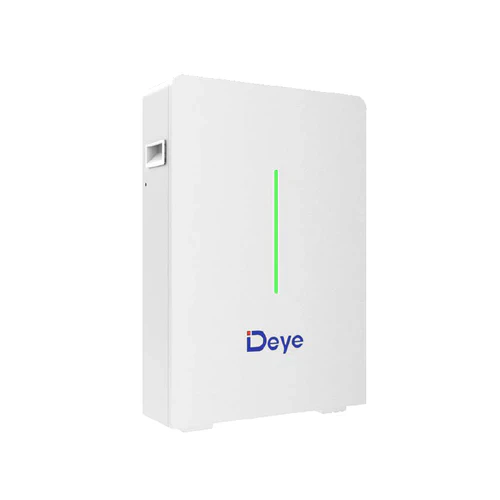
For example, the Deye SE-G5.1 Pro-B uses LiFePO₄ chemistry. It also includes an intelligent Battery Management System.
The system monitors battery conditions during operation. Consequently, charging and discharging can be managed more effectively.
The battery also supports high-depth discharge under specified operating conditions. This allows users to utilize a large portion of stored energy.
How Battery Management Affects Charging
A Battery Management System protects the battery during charging.
It monitors conditions such as:
- Battery voltage
- Temperature
- Charging current
- Cell balance
- State of charge
When necessary, the BMS can limit charging.
Therefore, charging speed can change depending on battery conditions.
This is not necessarily a problem. Instead, it helps protect the battery and support long-term performance.
Does Faster Charging Damage Lithium Batteries?
Fast charging is not automatically harmful.
However, batteries must operate within their recommended charging limits.
Excessive charging current can create heat and unnecessary stress. Therefore, the battery, inverter, and charging system must be properly matched.
A professional installation ensures charging settings follow manufacturer recommendations.
How to Charge Lithium Batteries Faster
If faster charging is important, consider these factors.
Use Enough Solar Panels
A larger solar array can provide more charging power.
However, the array must remain compatible with the inverter.
Choose the Right Inverter
Your inverter should support the battery’s charging requirements.
A properly sized inverter can prevent unnecessary charging limitations.
Choose the Correct Battery Size
Do not oversize or undersize the battery without proper planning.
Your storage capacity should match your daily energy requirements.
Reduce Unnecessary Loads
Heavy daytime loads consume available solar energy.
For example, running several high-power appliances while charging can reduce the energy reaching the battery.
Therefore, efficient energy management can improve charging performance.
Practical Example for a Nigerian Home
Imagine a home using a 10 kWh lithium battery.
The home has enough solar panels to provide approximately 5 kW during strong sunlight. During the afternoon, most household appliances use about 1 kW.
That leaves roughly 4 kW for battery charging.
Consequently, the battery could theoretically receive about 4 kWh per hour during that period.
However, actual charging will vary with sunlight and system conditions.
Why Professional System Design Matters
Charging speed is not determined by the battery alone.
Your complete system must work together.
This includes:
- Solar panels
- Inverter
- Lithium battery
- Protection devices
- Cables
- Mounting system
- Electrical loads
A poorly matched system can charge slowly. Conversely, a properly designed system can make excellent use of available solar energy.
Why Choose Jeho Ashar Energy?
At Jeho Ashar Energy, we understand that reliable energy storage requires more than simply purchasing a battery.
The company supplies Deye lithium batteries, genuine Jinko Solar panels, Deye hybrid inverters, mounting structures, cables, and protection devices. These products can be combined into properly designed residential, commercial, and industrial solar systems.
Professional load assessment also helps determine the appropriate battery capacity. Furthermore, correct inverter selection ensures the charging system operates within recommended limits.
Whether you are upgrading from tubular batteries or installing a new solar system, you can explore quality products and solar solutions at https://www.abujasolar.com.
Tips for Better Lithium Battery Charging
Follow these simple recommendations:
- Use compatible equipment.
- Install the correct battery size.
- Maintain adequate solar capacity.
- Avoid unnecessary daytime loads.
- Monitor charging performance.
- Follow manufacturer recommendations.
- Keep batteries in suitable conditions.
- Use qualified solar installers.
These practices can improve charging efficiency and battery lifespan.
Conclusion
So, how fast do lithium batteries charge? The answer depends on the battery capacity, inverter, solar panel capacity, sunlight, and charging settings.
Under suitable conditions, lithium batteries can recharge significantly faster than many traditional tubular batteries. However, charging speed should never be considered separately from safety and battery health.
A properly designed solar system balances charging speed, energy demand, battery capacity, and long-term reliability. With quality lithium batteries and professional installation, you can make better use of your solar energy every day.
Final Thought
Fast charging is valuable, but smart charging is better. Choose the right battery, inverter, and solar panels for your energy needs. With the right system design, your lithium battery can provide dependable stored power whenever you need it.
Learn more about quality solar solutions at https://www.abujasolar.com