
Solar power does not stay constant.
Your household demand changes throughout the day.
Meanwhile, batteries have limited storage capacity.
So, who manages all these moving parts?
That is where a hybrid inverter helps.
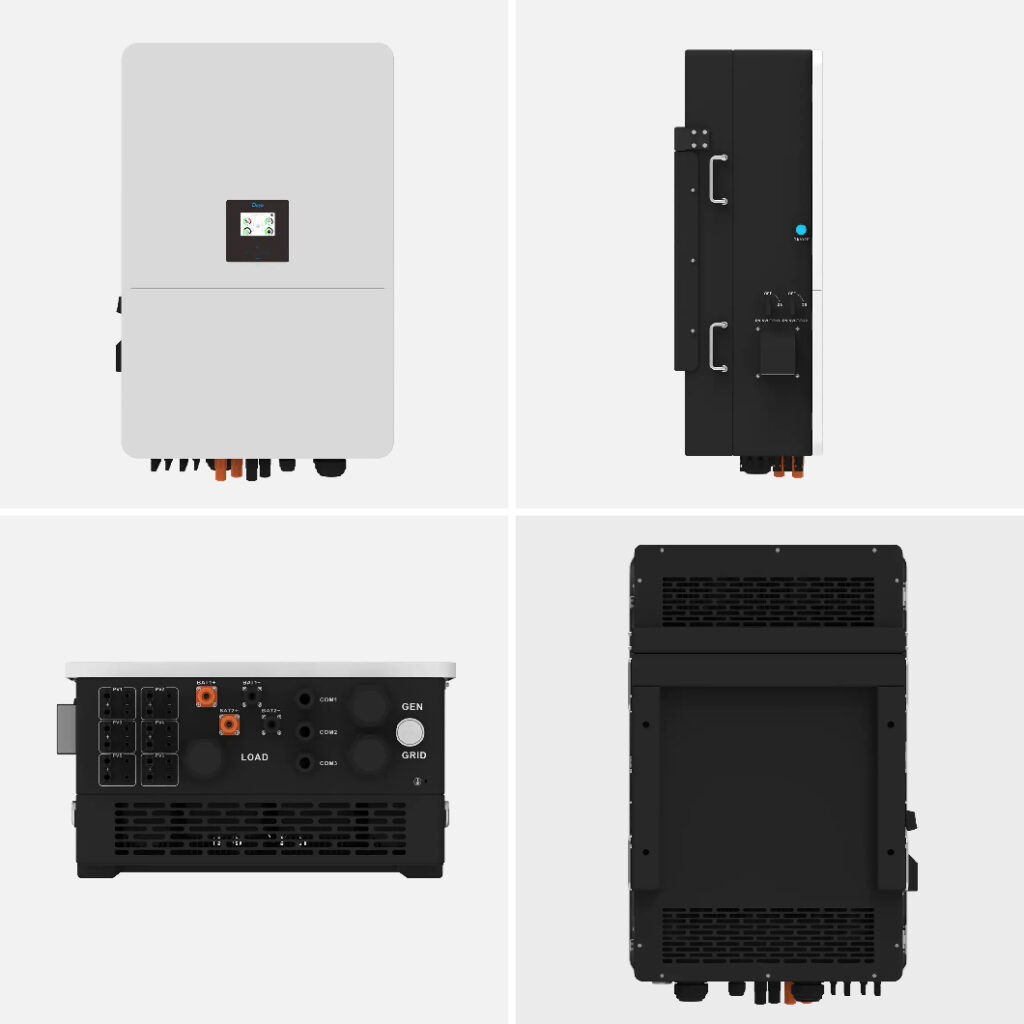
A Deye hybrid inverter coordinates available energy sources.
These include solar panels, batteries, and grid power.
Some models can also work with generators.
Instead of manually switching between sources, the inverter manages power automatically. It considers solar production, household demand, battery status, and configured operating settings. As a result, energy can move where it is needed most.
Understanding this process makes solar ownership easier.
It also helps users choose suitable system settings.
What Is A Deye Hybrid Inverter?
A hybrid inverter combines several energy functions.
First, it converts solar electricity into usable AC power.
It can also charge and discharge connected batteries.
Additionally, it manages interaction with the electrical grid.
Depending on the model, Deye hybrid inverters may support:
- Solar panel inputs
- Battery storage
- Grid connection
- Backup loads
- Generator integration
- Time-of-use settings
- Zero-export operation
- Parallel inverter configurations
- Energy monitoring
Deye offers different inverter ranges for residential and commercial applications. Therefore, available features depend on the specific model.
This distinction is important when planning a solar installation.
The Main Energy Sources
A typical Deye hybrid system can manage several sources.
Solar Energy
Solar panels produce electricity during daylight hours.
The inverter converts this energy for household use.
Battery Storage
Batteries store available energy for later use.
They can provide power after sunset.
Grid Electricity
The grid can supplement the system when necessary.
It can also charge the battery under selected settings.
Generator Power
Compatible Deye models can integrate generators.
This provides another energy source when required.
The inverter coordinates these sources according to its configuration.
How Deye Uses Solar Energy
Solar power is generally the first energy source available during daylight.
Imagine your panels produce 5kW.
Your home currently needs 3kW.
The inverter can direct 3kW toward your appliances.
The remaining 2kW can charge the battery.
If the battery is already full, excess energy may be exported. However, export depends on the system configuration and local requirements.
This simple process reduces wasted solar production.
It also allows homeowners to use more generated energy directly.
How Deye Charges The Battery
Battery charging depends on available solar energy.
When solar production exceeds household demand, the surplus can charge the battery.
For example:
- Solar production: 6kW
- Household demand: 3kW
- Potential surplus: 3kW
The battery can receive some or all of that surplus.
However, charging does not continue without limits. The battery has specific voltage and current requirements. Its Battery Management System also communicates important operating limits.
The inverter uses this information during charging.
Therefore, correct battery compatibility and configuration are essential.
How Deye Uses Stored Battery Energy
The battery becomes particularly useful after sunset.
Solar production drops as daylight disappears.
Household appliances, however, continue operating.
The inverter can then draw energy from the battery.
Suppose your home requires 2kW at night.
The battery can provide that energy.
This reduces dependence on the grid.
Battery operation also depends on configured limits. For instance, homeowners can set a minimum state of charge. Once that level is reached, the inverter can change how the home receives power.
This helps preserve stored energy for later use.
How Deye Uses Grid Power
The electrical grid provides another energy option.
Grid power can support household loads when solar and battery energy are insufficient.
For example, cloudy weather may reduce solar production.
At the same time, household consumption may increase.
The inverter can respond by using grid electricity.
This prevents the battery from carrying every demand alone.
Grid charging can also be configured on compatible systems. That can be useful when users want to charge batteries during selected periods.
However, settings should reflect the user’s energy needs.
Understanding Deye Power Priority Modes
One of the most useful Deye features is power priority.
These settings determine how available energy gets used.
Load First
Load First prioritizes household consumption.
Solar energy first supplies the connected loads.
Any remaining energy can then charge the battery.
For example, 5kW of solar production can supply a 3kW load. The remaining 2kW may then go toward battery charging.
This mode can suit users focused on immediate solar consumption.
Battery First
Battery First gives greater priority to charging storage.
Solar energy can charge the battery according to configured limits. Remaining energy can then support household loads.
This setting can be useful when stored energy is a priority.
For example, a homeowner expecting an evening outage may want more energy stored before sunset.
The correct choice depends on the household’s requirements.
Selling First
Some Deye systems support Selling First operation.
This mode allows configured excess energy to move toward the grid.
The inverter can supply household loads first.
It can then charge the battery.
Additional available energy may be exported.
Grid export requires appropriate equipment and approval.
Therefore, users should follow local electrical requirements.
What Is Zero Export?
Some solar installations should not send electricity into the grid.
For these systems, Deye provides zero-export options on compatible models.
The inverter uses measurements from devices such as CTs or smart meters. It monitors electricity flowing between the property and grid.
The inverter can then adjust its output.
This helps prevent unintended energy export.
Zero-export operation can be useful for properties without approved feed-in arrangements.
However, correct installation is essential.
How Deye Handles Backup Power
Backup operation is another major advantage.
When the grid fails, compatible Deye systems can supply designated backup loads.
The battery becomes an important power source.
For example, backup circuits might include:
- Lighting
- Refrigerators
- Fans
- Internet equipment
- Security systems
- Selected office equipment
Not every appliance should necessarily use backup power.
Large air conditioners and pumps can create substantial demand. Some appliances also have high starting currents.
Therefore, backup circuits should be planned carefully.
The inverter and battery must support the expected loads.
Managing Heavy Electrical Loads
Household demand can change within seconds.
A refrigerator may start.
Then a water pump may switch on.
An air conditioner could start shortly afterward.
The combined demand can become significant.
A properly sized Deye inverter can manage changing loads within its rated capabilities. However, it cannot provide unlimited power.
For this reason, system sizing matters.
Installers should consider both normal consumption and peak demand.
Motor starting requirements deserve particular attention.
How Battery Communication Supports Power Management
The inverter needs accurate battery information.
That information comes through communication with the battery’s BMS.
The BMS can provide information such as:
- State of charge
- Battery voltage
- Current
- Temperature
- Charging limits
- Discharge limits
- Protection status
The inverter uses this information when controlling battery operation.
This explains why communication cables and settings matter.
A communication problem can lead to incorrect battery readings. It can also restrict charging or discharging.
Therefore, compatible equipment should always be used.
Time-of-Use Energy Management
Energy requirements change throughout the day.
Deye systems with time-of-use functions can respond to these patterns.
For example, a household might use this schedule:
Morning
Solar production begins rising.
The inverter can prioritize household consumption.
Afternoon
Solar production reaches higher levels.
Surplus energy can charge the battery.
Evening
Solar production falls.
Stored energy can support household loads.
Night
The battery can continue supplying selected loads. Grid support can become available when configured.
This approach gives homeowners greater control.
It can also help align battery operation with their daily routine.
A Simple Example
Consider a home with a Deye hybrid inverter and lithium battery.
The system starts the morning with stored energy.
As sunlight increases, solar production begins.
The inverter supplies household appliances.
Surplus solar then charges the battery.
By afternoon, the battery may reach its configured target.
As evening approaches, solar production decreases.
The battery begins supporting household consumption.
Later, the battery reaches its minimum configured level.
The inverter can then use grid power if required.
No manual switching is necessary.
The inverter manages these changes automatically
How To Get Better Results From Your Deye System
Good equipment works best with proper planning.
Before installation, assess your actual energy requirements.
Consider these factors:
- Daily electricity consumption
- Peak household demand
- Essential backup loads
- Desired battery capacity
- Solar panel capacity
- Grid availability
- Generator requirements
- Future energy needs
After installation, monitor system performance regularly.
Also, avoid changing advanced settings without guidance.
Incorrect parameters can affect battery performance and power management.
Always follow the documentation for your specific Deye model.
Deye Hybrid Inverters And Jeho Ashar Energy
Choosing an inverter is only one part of solar planning.
The battery, panels, loads, and installation must work together.
Jeho Ashar Energy provides Deye inverter and battery solutions for different applications. These products can support homes, businesses, and other energy projects.
However, the right configuration depends on individual requirements.
A household with heavy loads needs different equipment from a small home. Similarly, backup-focused systems require different planning from grid-connected installations.
For quality solar equipment and professional energy solutions, visit https://www.abujasolar.com.
Conclusion
A Deye hybrid inverter acts as an energy coordinator.
It manages solar production, battery storage, household loads, and grid power. Compatible models can also integrate generators and provide backup operation.
Its power priority settings add another layer of control.
Load First emphasizes immediate consumption.
Battery First prioritizes energy storage.
Selling First can support configured grid export.
Zero Export helps prevent unwanted export.
Time-of-use settings provide even more flexibility.
However, good performance starts with proper system design.
The inverter must match the battery.
The battery must match the energy demand.
The backup loads must fit the inverter’s capacity.
When these elements work together, solar energy becomes easier to manage.
Final Thought
Your inverter quietly manages energy all day.
Understanding its decisions helps you use it better.
Start by learning your power needs.
Then choose settings that match them.
A well-designed system can make every unit of energy count.
Learn more about quality solar solutions at https://www.abujasolar.com