
A solar battery is a major investment. Therefore, buyers naturally ask one question. How many years will a lithium battery last?
The answer depends on several factors. Battery chemistry plays an important role. Usage patterns also affect battery lifespan.
Furthermore, charging habits can influence performance. Temperature, installation, and battery management matter too. Consequently, two similar batteries may age differently.
Modern lithium batteries can provide many years of service. With proper installation and maintenance, they can deliver reliable energy storage for a long time.
This guide explains lithium battery lifespan clearly. You will also learn what affects battery life. Finally, we will cover ways to extend battery performance.
How Long Do Lithium Batteries Last?
Most quality solar lithium batteries can last many years, depending on their chemistry, design, usage, and operating conditions.
For solar applications, lithium iron phosphate batteries are particularly popular. They are commonly known as LiFePO₄ batteries.
Their lifespan is often discussed using cycle life. A cycle represents the equivalent of using and recharging the battery.
For example, a battery with a high cycle rating can withstand many charge and discharge cycles. However, actual lifespan depends on how those cycles occur.
Therefore, cycle count should not be the only consideration.
What Determines Lithium Battery Lifespan?
Several factors determine how long a lithium battery lasts.
The most important include:
- Battery chemistry
- Cycle frequency
- Depth of discharge
- Charging conditions
- Operating temperature
- Battery management system
- Installation quality
- Maintenance practices
- Battery quality
Additionally, the inverter must be properly matched. Incorrect settings can place unnecessary stress on the battery.
Therefore, good system design is essential.
What Is Battery Cycle Life?
Cycle life describes how many charge cycles a battery can complete. It is one of the most important battery lifespan measurements.
However, one cycle does not always mean one day.
Suppose you use 50% of your battery today. Then, you recharge it completely.
Later, you use another 50%.
Together, those two partial discharges represent approximately one full equivalent cycle.
Therefore, frequent partial usage can accumulate gradually.
Does Deeper Discharge Reduce Battery Life?
Yes, depth of discharge can affect battery longevity.
Depth of Discharge, or DoD, describes how much capacity you use.
For example, using 50% of a battery means approximately 50% DoD.
Using 90% means approximately 90% DoD.
Generally, shallower cycling can reduce stress. However, modern lithium batteries are designed for substantial daily usage.
Therefore, users should follow the manufacturer’s recommended operating range.
Avoid deliberately pushing the battery beyond its specified limits.
Why LiFePO₄ Batteries Are Popular
Many modern solar storage systems use LiFePO₄ batteries.
This chemistry offers several useful characteristics.
For example:
- Long cycle life
- Good thermal stability
- High usable capacity
- Low maintenance requirements
- Reliable daily cycling
- Strong energy storage performance
Consequently, LiFePO₄ batteries are widely used in residential and commercial solar systems.
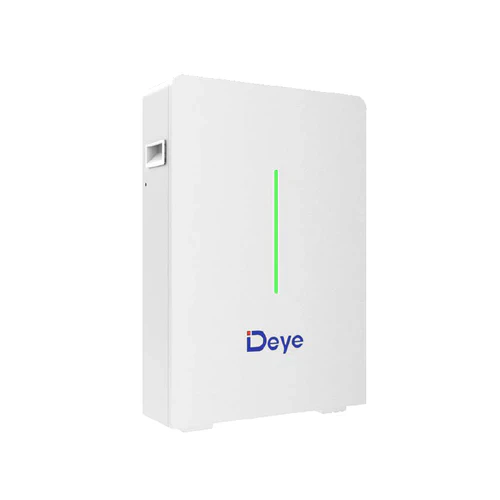
Deye lithium batteries are examples of lithium storage products used in solar applications.
However, performance still depends on proper installation and configuration.
How Temperature Affects Battery Life
Temperature has a major influence on batteries.
Extreme temperatures can affect battery performance. Very high temperatures can accelerate battery aging.
Meanwhile, very low temperatures can affect charging performance.
Therefore, batteries should be installed in suitable environments.
Avoid placing batteries near excessive heat sources. Also, provide appropriate ventilation where required by the manufacturer.
The installation location should remain clean and dry.
Why Battery Management Matters
A lithium battery includes a Battery Management System, commonly called a BMS.
The BMS monitors important battery conditions.
These can include:
- Cell voltage
- Temperature
- Charging current
- Discharging current
- State of charge
- Cell balance
Furthermore, the BMS provides important protection functions.
It can help prevent overcharging and excessive discharge. It can also respond to abnormal operating conditions.
Therefore, the BMS plays an important role in battery safety and longevity.
How Often Should You Charge a Lithium Battery?
Lithium batteries are designed for regular charging.
In solar systems, they may charge during daylight hours. They can then supply energy during the evening.
This daily cycle is normal.
However, charging should remain within manufacturer specifications.
The inverter should use suitable charging parameters. Communication between compatible equipment can also improve system coordination.
Therefore, battery and inverter compatibility matters greatly.
Can Leaving a Lithium Battery at 100% Damage It?
A lithium battery can safely reach 100% charge when operated according to manufacturer specifications.
However, keeping any battery at extreme states continuously may affect long-term aging.
Therefore, the system should follow recommended charging settings.
For solar systems, intelligent inverter controls can manage charging and discharging automatically.
The goal is not to avoid 100% charge completely. Instead, the goal is to operate within the battery’s recommended range.
Can You Discharge a Lithium Battery Completely?
You should not intentionally over-discharge a lithium battery.
Modern batteries include protection systems. These systems can disconnect the battery before dangerous conditions occur.
However, repeatedly forcing the battery to its lowest limits is unnecessary.
Consequently, appropriate low-voltage settings are important.
Your installer should configure the system according to manufacturer requirements.
How Solar Usage Affects Battery Lifespan
Solar systems can cycle batteries regularly.
During the day, solar panels generate electricity. Some energy powers appliances directly.
Excess energy can charge the battery.
Later, the battery supplies stored energy.
This creates a regular charging cycle.
Therefore, proper solar sizing can improve system performance. An appropriately sized solar array can also help recharge the battery efficiently.
What Happens As a Lithium Battery Ages?
Lithium batteries do not usually stop working suddenly.
Instead, their usable capacity gradually decreases.
For example, an aging battery may no longer store the same amount of energy it held when new.
You may notice:
- Shorter backup periods
- Reduced available capacity
- Faster apparent discharge
- Lower overall performance
However, gradual degradation is normal.
The battery can still remain useful after significant aging.
Therefore, lifespan should not simply mean “the battery stops working.”
How Can You Extend Lithium Battery Life?
Proper usage can help preserve battery performance.
1. Avoid Extreme Temperatures
Keep the battery within recommended temperature limits.
2. Use Correct Inverter Settings
Incorrect charging settings can affect battery performance.
3. Avoid Unnecessary Deep Discharge
Use the recommended DoD range.
4. Choose Quality Batteries
Battery quality strongly affects long-term performance.
5. Install Properly
Correct installation helps prevent electrical problems.
6. Monitor Battery Performance
Watch for unusual warnings or performance changes.
7. Use Compatible Equipment
Choose compatible batteries and inverters.
8. Follow Manufacturer Guidelines
Always prioritize official specifications.
These practices can support reliable long-term operation.
Does Battery Size Affect Lifespan?
Yes, battery sizing can influence battery stress.
Imagine a home using 8kWh daily.
A 10kWh battery may experience relatively deep daily cycling.
A larger battery bank may provide the same energy using shallower cycles.
Consequently, proper battery sizing can help reduce unnecessary stress.
However, buying excessive battery capacity is not always economical.
The goal is to find the right balance.
A Simple Solar Battery Example
Imagine a home with a 20kWh lithium battery.
The household uses 8kWh overnight.
That represents approximately 40% of the battery’s rated capacity.
The system then recharges during the following day.
This is relatively moderate daily usage.
Now imagine another household using 18kWh every night.
That system operates much closer to its available capacity.
Therefore, the second battery may experience deeper daily cycling.
This demonstrates why energy consumption matters.
Why Quality Matters
Not all lithium batteries are manufactured equally.
Battery cells, BMS design, thermal management, and quality control vary between products.
Therefore, buying based only on capacity can be risky.
A 10kWh battery is not defined solely by its capacity.
You should also consider:
- Manufacturer reputation
- Warranty terms
- Cycle specifications
- Battery chemistry
- BMS capabilities
- Inverter compatibility
- Installation requirements
- After-sales support
Quality equipment can provide better long-term value.
How Long Can Deye Lithium Batteries Last?
Deye offers lithium battery solutions for solar energy storage. Depending on the specific model, specifications can differ.
Therefore, lifespan should always be checked against the exact product documentation.
Deye lithium batteries can be integrated with compatible Deye inverter systems. This can support coordinated charging and discharging.
However, installation quality remains essential.
The battery should also be operated within its specified limits.
For customers considering lithium storage, Jeho Ashar Energy provides Deye lithium battery solutions alongside compatible solar equipment.
Why Choose Jeho Ashar Energy?
A long-lasting battery needs more than quality cells.
It also needs correct system design.
Jeho Ashar Energy supplies Deye lithium batteries, Deye inverters, Jinko solar panels, cables, and protection equipment.
These products support different residential, commercial, and industrial applications.
Furthermore, proper system sizing helps protect your investment.
The right battery should match your energy needs. The inverter should also match the battery system.
You can explore solar solutions from Jeho Ashar Energy at https://www.abujasolar.com.
Signs Your Lithium Battery Needs Attention
Battery degradation is normal. However, some changes deserve attention.
Watch for:
- Unexpected shutdowns
- Significant capacity loss
- Unusual battery temperatures
- Frequent BMS warnings
- Unusual charging behavior
- Sudden backup reduction
- Visible physical damage
If you notice these issues, contact a qualified technician.
Do not attempt internal battery repairs yourself.
Lithium Battery vs Tubular Battery Lifespan
Lithium and tubular batteries have different characteristics.
Tubular batteries are lead-acid batteries. They generally require more maintenance and careful discharge management.
Lithium batteries can offer greater usable capacity. They also typically support more frequent cycling.
Furthermore, lithium batteries usually require less routine maintenance.
However, the purchase price can be higher.
Therefore, buyers should consider total ownership costs.
A cheaper battery may not always provide better long-term value.
Is a Lithium Battery Worth the Investment?
For many solar users, lithium batteries can be a strong investment.
They provide high usable capacity and convenient operation. They can also support frequent daily cycling.
Furthermore, their long service potential can help justify the initial cost.
However, the battery must be correctly sized and installed.
Poor system design can reduce the benefits.
Therefore, always evaluate the complete solar system.
Conclusion
So, how many years will a lithium battery last?
There is no single number for every battery.
Lifespan depends on chemistry, cycles, DoD, temperature, charging, installation, and maintenance.
Quality LiFePO₄ batteries can provide many years of solar storage. However, proper operation remains essential.
Choose quality equipment. Use compatible inverters. Follow recommended battery settings.
Most importantly, size your system correctly.
A good battery is an investment. Good battery management protects that investment.
Final Thought
Don’t choose a battery by capacity alone.
Look at lifespan, quality, compatibility, and support. A properly designed system can provide dependable energy for years.
Learn more about quality solar solutions at https://www.abujasolar.com
