
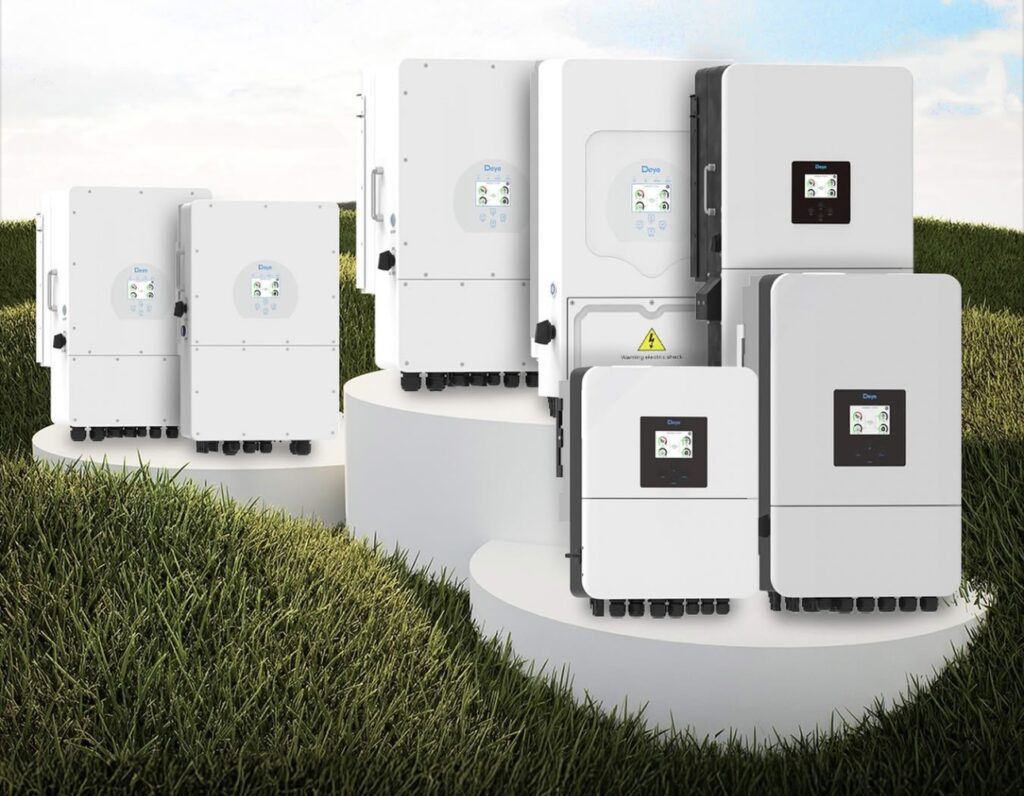
Choosing the right Deye inverter is one of the most important decisions when installing a solar power system. Many people focus on buying more solar panels or bigger batteries. However, an incorrectly sized inverter can reduce your system’s performance, waste money, and even shorten the lifespan of your equipment.
A Deye inverter acts as the control center of your solar system. It manages electricity from your solar panels, batteries, the national grid, and even a generator. Therefore, selecting the correct size ensures that every component works together efficiently.
In this guide, you’ll learn how to size a Deye inverter correctly, the factors that affect inverter selection, common sizing mistakes to avoid, and why professional system design matters. Whether you’re powering a home, office, shop, or factory, this guide will help you make an informed decision.
At Jeho Ashar Energy, we supply genuine Deye hybrid inverters, premium Jinko solar panels, high-performance lithium batteries, and complete solar installation services across Nigeria. Visit https://www.abujasolar.com to explore our solar solutions.
What Does Inverter Size Mean?
Many people assume inverter size refers to its physical dimensions.
Actually, inverter size refers to the maximum electrical load it can safely handle. It is usually measured in kilowatts (kW) or kilovolt-amperes (kVA).
For example:
- 5kW inverter
- 6kW inverter
- 8kW inverter
- 10kW inverter
- 12kW inverter
- 16kW inverter
- 20kW inverter
Generally, the higher the rating, the more appliances the inverter can power at the same time.
Why Correct Inverter Sizing Matters
Selecting the correct Deye inverter size affects your entire solar system.
A properly sized inverter offers several benefits:
- Stable electricity supply
- Better solar performance
- Longer battery life
- Improved energy efficiency
- Lower maintenance costs
- Room for future expansion
On the other hand, an undersized inverter may overload during heavy usage. Meanwhile, an oversized inverter may cost more than necessary and operate below its optimal efficiency.
Step 1: Calculate Your Total Power Load
The first step is knowing how much electricity you actually use.
Make a list of the appliances you want your solar system to power.
For example:
| Appliance | Estimated Power |
|---|---|
| LED Lights | 150W |
| Television | 120W |
| Refrigerator | 300W |
| Fans | 250W |
| Laptop | 120W |
| Water Pump | 800W |
| Air Conditioner | 1,500W |
Add the total wattage of appliances that may run simultaneously.
For instance, if your total running load is around 3,200 watts, a 5kW Deye inverter could comfortably handle that demand while leaving room for occasional power surges.
Step 2: Consider Starting Power
Some appliances require extra power when they start.
These include:
- Refrigerators
- Air conditioners
- Water pumps
- Deep freezers
- Electric motors
This temporary increase is called surge power or starting current.
For example, a refrigerator rated at 300W may briefly require two or three times that amount during startup.
Therefore, your inverter should have enough capacity to handle these temporary surges without shutting down.
Step 3: Think About Future Expansion
Many people underestimate their future electricity needs.
Today, you may only need lights and a television. Next year, you may add:
- Additional air conditioners
- More computers
- CCTV systems
- Washing machines
- Electric gates
- More refrigeration
Planning for future expansion can save money later.
Instead of replacing your inverter after a few years, selecting a slightly larger model today often proves more economical.
Step 4: Match the Inverter with Your Battery Bank
Your batteries and inverter should work together.
Battery capacity influences how long your appliances can run, while the inverter determines how much power can be delivered at once.
For example:
- Small battery bank → Smaller inverter
- Medium battery bank → Mid-sized inverter
- Large lithium battery bank → Larger hybrid inverter
Deye hybrid inverters are designed to work efficiently with modern lithium batteries, making them an excellent choice for residential and commercial installations.
Step 5: Size Your Solar Panels Properly
Solar panels also play an important role.
The inverter should be compatible with your solar array size and operating voltage.
Premium Jinko solar panels are available in several power ratings, including:
- 530W
- 585W
- 615W
- 620W
- 635W
- 640W
- 715W
Choosing the right combination of panels ensures the inverter operates efficiently throughout the day.
A professional installer will calculate the ideal number of panels based on your energy consumption and available roof space.
Common Deye Inverter Sizes and Their Uses
Different properties require different inverter capacities.
5kW–6kW Deye Inverters
Ideal for:
- Small homes
- Apartments
- Basic residential loads
Can typically power:
- Lights
- Fans
- Television
- Refrigerator
- Laptops
- Small appliances
8kW–12kW Deye Inverters
Suitable for:
- Large homes
- Offices
- Restaurants
- Retail stores
Can comfortably handle:
- Multiple air conditioners
- Refrigeration
- Office equipment
- Water pumps
- Security systems
16kW–20kW Deye Inverters
Recommended for:
- Hotels
- Schools
- Farms
- Hospitals
- Manufacturing facilities
- Large commercial buildings
These systems support higher electrical loads and are designed for demanding environments.
Common Mistakes When Sizing a Deye Inverter
Many buyers unknowingly make expensive mistakes.
Avoid the following:
- Buying the cheapest inverter available.
- Ignoring future energy needs.
- Forgetting appliance surge loads.
- Choosing an inverter before calculating total load.
- Using incompatible batteries.
- Installing too few solar panels.
- Ignoring professional advice.
These mistakes can lead to frequent overloads, poor battery performance, and unnecessary upgrade costs.
Real-Life Example
Consider a small printing business in Abuja.
Initially, the owner planned to install a 5kW inverter because it was less expensive. However, after calculating the total electrical load—including computers, printers, lighting, air conditioning, and future expansion—it became clear that an 8kW Deye hybrid inverter was the better choice.
Although the initial investment was slightly higher, the business avoided overload issues and future replacement costs. Furthermore, the system now accommodates additional equipment without requiring major upgrades.
Why Professional Sizing Matters
Solar system design involves more than simply choosing an inverter.
Professional installers evaluate:
- Daily electricity usage
- Peak demand
- Battery capacity
- Solar panel output
- Roof orientation
- Future expansion
- Backup requirements
- Generator integration
This detailed assessment ensures every component works together efficiently.
At Jeho Ashar Energy, every installation begins with a thorough energy assessment before equipment is recommended.
Why Choose Jeho Ashar Energy?
A quality inverter performs best when paired with genuine equipment and expert installation.
Jeho Ashar Energy supplies complete solar solutions throughout Nigeria.
Our products include:
- Genuine Deye Hybrid Inverters
- Growatt Inverters
- Premium Jinko Solar Panels
- Lithium Batteries
- Solar Mounting Systems
- Protection Devices
- Solar Cables
- Professional Installation
- Preventive Maintenance
- Technical Support
Every system is designed according to your specific energy requirements. Our experienced engineers ensure your inverter, batteries, and solar panels are properly matched for maximum efficiency and long-term reliability.
Whether you need solar for your home, office, school, business, or industrial facility, our team is ready to help.
Visit https://www.abujasolar.com to request a free consultation or learn more about our products and services.
Conclusion
Sizing a Deye inverter correctly is one of the most important steps in building an efficient solar power system. The right inverter provides reliable electricity, protects your batteries, improves energy efficiency, and allows your system to grow as your energy needs increase.
Rather than focusing only on price, consider your current electricity usage, future expansion plans, battery capacity, and solar panel size. Investing in the right inverter today can save you significant money and frustration in the future.
Working with experienced professionals also makes a difference. Proper system design ensures every component performs at its best and delivers dependable power for many years.
Final Thought
A well-sized Deye inverter is the foundation of a reliable solar system. Invest wisely, choose genuine products, and work with trusted professionals to enjoy uninterrupted power and long-term savings.
Learn more about quality solar solutions at https://www.abujasolar.com