
Modern solar batteries are smarter than ever. They do more than store energy. They also monitor, protect, and manage themselves. At the heart of this intelligence is a technology known as the Battery Management System, often called the BMS.
If you use lithium batteries in a solar system, the BMS plays a critical role. Without it, battery performance, lifespan, and safety could be affected. Therefore, understanding what a Battery Management System is can help you make better decisions when investing in solar energy.
In this guide, we explain what a Battery Management System is, how it works, why it matters, and why it has become an essential part of modern lithium batteries.
What Is a Battery Management System?
A Battery Management System (BMS) is an electronic control system installed inside a battery.
Its primary job is to monitor and protect the battery during operation.
The BMS constantly checks important battery conditions such as:
- Voltage
- Current
- Temperature
- State of charge
- Cell balance
If the system detects unsafe conditions, it can take action to protect the battery.
As a result, the battery operates more safely and efficiently.
Why Is a Battery Management System Important?
Lithium batteries contain multiple cells working together.
Each cell must operate within specific limits. If one cell becomes overcharged or overheated, the entire battery can be affected.
This is where the Battery Management System becomes valuable.
The BMS helps:
- Protect battery health
- Improve safety
- Increase lifespan
- Optimize performance
- Monitor battery conditions
Therefore, it acts as the battery’s intelligent control center.
How Does a Battery Management System Work?
A Battery Management System continuously collects information from the battery.
It measures various parameters and compares them to safe operating limits.
When everything is normal, the battery operates normally.
However, if a problem occurs, the BMS can respond immediately.
For example, it may:
- Reduce charging current
- Stop charging
- Stop discharging
- Disconnect the battery
- Send warning signals
Consequently, potential damage can be prevented before it becomes serious.
Main Functions of a Battery Management System
A Battery Management System performs several important tasks.
1. Overcharge Protection
Overcharging can damage lithium batteries.
The BMS monitors battery voltage during charging.
If the battery approaches unsafe levels, the system can limit or stop charging.
As a result, battery health is protected.
2. Over-Discharge Protection
Completely draining a battery can reduce its lifespan.
The BMS prevents excessive discharge by monitoring voltage levels.
When necessary, it can disconnect loads.
Therefore, the battery remains within safe operating limits.
3. Temperature Monitoring
Battery temperature affects performance and safety.
The BMS constantly checks battery temperature.
If temperatures become too high or too low, protective actions can be triggered.
This helps maintain stable operation.
4. Cell Balancing
Lithium batteries contain multiple cells.
Over time, some cells may charge slightly differently than others.
Cell balancing helps keep all cells at similar voltage levels.
Benefits include:
- Better efficiency
- Longer lifespan
- Improved performance
- Greater reliability
Consequently, the battery operates more consistently.
5. Current Monitoring
The BMS tracks how much current enters and leaves the battery.
This helps prevent:
- Excessive charging current
- Excessive discharge current
- Electrical stress
Therefore, the battery remains protected during daily use.
Components of a Battery Management System
Although designs vary, most Battery Management Systems include several key components.
Sensors
Sensors collect battery information.
They monitor:
- Voltage
- Current
- Temperature
The BMS uses this information to make decisions.
Control Unit
The control unit processes collected data.
It compares operating conditions against programmed limits.
When needed, it activates protective measures.
Communication Interface
Many modern batteries communicate with inverters.
The BMS can exchange information using communication protocols such as:
- CAN
- RS485
This allows the inverter and battery to work together more effectively.
Protection Circuits
Protection circuits help disconnect the battery during unsafe conditions.
These circuits provide another layer of safety.
Types of Battery Management Systems
Different battery systems use different BMS designs.
Centralized BMS
A centralized BMS uses one control unit.
All battery cells connect to this unit.
Advantages include:
- Simple design
- Lower cost
- Easier installation
However, wiring can become more complex in large systems.
Distributed BMS
A distributed BMS places smaller monitoring units near battery cells.
These units communicate with a central controller.
Benefits include:
- Improved scalability
- Reduced wiring
- Better flexibility
Modular BMS
A modular BMS combines elements of both approaches.
It is commonly used in larger battery systems.
Therefore, it offers flexibility while maintaining strong control.
Battery Management Systems in Solar Batteries
Solar batteries often charge and discharge daily.
This places continuous demands on the battery.
A Battery Management System helps manage these demands safely.
For example, it can:
- Monitor charging from solar panels
- Coordinate with hybrid inverters
- Protect against abnormal conditions
- Improve battery efficiency
As a result, the solar system performs more reliably.
Why Lithium Batteries Need a BMS
Traditional lead-acid batteries operate differently.
Lithium batteries require more precise control.
Therefore, nearly all modern lithium batteries include a Battery Management System.
Without a BMS:
- Cells may become unbalanced
- Battery life may decrease
- Safety risks may increase
- Performance may decline
Consequently, the BMS is considered essential for lithium technology.
Real-Life Example
Imagine a home solar system during a hot afternoon.
The solar panels are generating power. The inverter is charging the battery.
Suddenly, battery temperature begins rising.
Without a Battery Management System, the battery might continue charging normally.
However, with a BMS installed, temperature monitoring detects the change.
The system can adjust charging conditions or stop charging if necessary.
Therefore, the battery remains protected.
Battery Management Systems and Deye Lithium Batteries
Many modern lithium batteries include advanced Battery Management Systems.
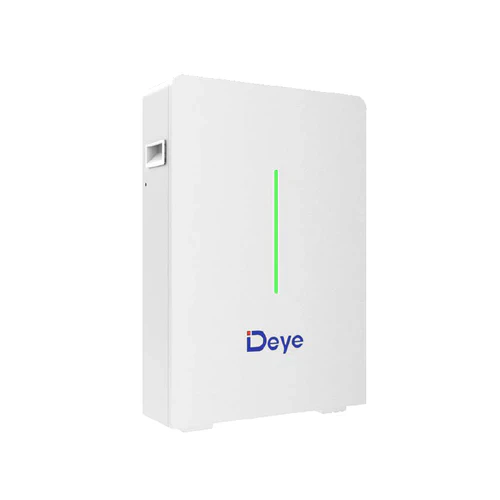
For example, Deye lithium batteries feature intelligent BMS technology designed to monitor battery conditions continuously.
The BMS helps manage:
- Charging
- Discharging
- Temperature
- Cell balancing
- System communication
As a result, Deye batteries deliver reliable performance for solar energy storage applications.
Benefits of a Battery Management System
A quality Battery Management System offers numerous advantages.
These include:
- Improved battery safety
- Longer battery lifespan
- Better charging control
- Higher system efficiency
- Enhanced battery monitoring
- Reduced maintenance issues
- More reliable performance
Therefore, the BMS adds significant value to modern lithium batteries.
Best Practices for Battery Protection
Although the BMS provides protection, proper installation remains important.
Follow these recommendations:
- Use genuine lithium batteries.
- Install compatible inverters.
- Ensure proper ventilation.
- Avoid unauthorized modifications.
- Monitor system performance.
- Follow manufacturer guidelines.
- Use qualified installers.
These practices help maximize battery performance and lifespan.
Why Choose Jeho Ashar Energy?
Choosing a battery involves more than selecting storage capacity. Proper system design and quality components are equally important.
Jeho Ashar Energy supplies premium Deye lithium batteries, genuine Jinko Solar panels, Deye hybrid inverters, mounting structures, cables, and protection devices. These products are carefully selected to deliver dependable performance for residential, commercial, and industrial solar systems.
In addition, the team provides professional load assessment, system design, installation, and after-sales support. Whether you are building a new solar system or upgrading an existing one, you can find quality products and expert guidance at https://www.abujasolar.com.
Conclusion
Understanding what a Battery Management System is helps you appreciate the technology behind modern lithium batteries. A BMS continuously monitors, protects, and optimizes battery operation. It helps prevent overcharging, over-discharging, overheating, and cell imbalance while improving performance and lifespan.
As solar energy adoption continues to grow, Battery Management Systems have become an essential part of reliable energy storage. Whether for homes or businesses, a quality lithium battery with an intelligent BMS provides greater safety, efficiency, and long-term value.
Final Thought
A lithium battery is only as smart as the system managing it. Investing in batteries with advanced Battery Management Systems helps protect your investment and ensures dependable energy storage for years to come.
Learn more about quality solar solutions at https://www.abujasolar.com
