Running a filling station requires reliable power. Pumps must remain operational throughout the day. Lighting must also remain dependable. Security systems need constant power too.
However, electricity supply can be unpredictable. Generator costs can also become expensive. Fuel prices continue affecting operating expenses. Therefore, many businesses need better power solutions.
This is where solar power becomes valuable.
Solar for filling stations in Abuja can reduce generator dependence. It can also support important daily operations. Furthermore, solar systems can provide cleaner and quieter power.
A properly designed system can power many station loads. These include lighting, offices, CCTV, POS systems, and networking equipment. Depending on the design, larger systems can support additional commercial loads.
For filling station owners, solar is more than backup. It can become part of a smarter energy strategy.
Why Filling Stations Need Reliable Power
Filling stations depend heavily on electricity. A power interruption can affect several operations. It can also create inconvenience for customers.
For example, pumps need electricity to operate. Payment systems also require stable power. Meanwhile, security equipment must stay active.
Other common electrical loads include:
- Forecourt lighting
- Office lighting
- CCTV cameras
- POS terminals
- Computers
- Internet routers
- Air conditioners
- Refrigerators and freezers
- Signage and display lights
- Security systems
- Staff facilities
- Water pumps
Therefore, power failure affects more than pumps.
It can interrupt customer service. It can also reduce business efficiency. In addition, frequent generator use increases operating costs.
A well-designed solar system helps address these challenges.
How Solar Works for a Filling Station
A commercial solar system has several key components. Each component performs an important role.
1. Solar Panels
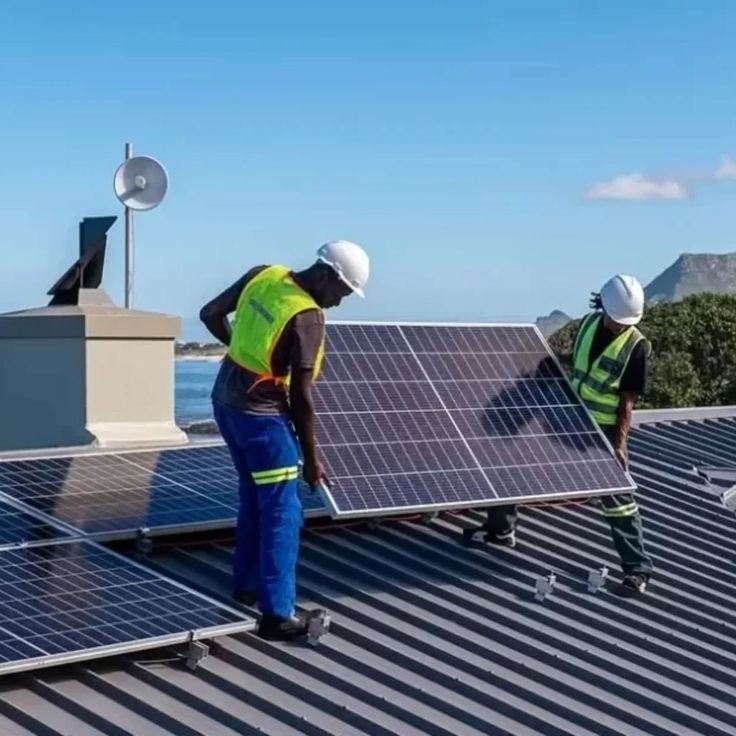
Solar panels capture sunlight during the day. They convert sunlight into electrical energy.
For commercial installations, panel selection matters. Higher-wattage panels can provide strong generation from limited roof space.
Quality panels also offer better long-term reliability. Therefore, reputable brands should always be considered.
Jeho Ashar Energy supplies premium solar panels for commercial applications. These include high-output Jinko solar panels.
2. Solar Inverter
The inverter manages the electricity produced. It also converts solar energy into usable power.
Additionally, hybrid inverters can manage multiple power sources. These may include solar, batteries, and grid electricity.
For larger filling stations, inverter sizing becomes especially important. The inverter must match the station’s electrical requirements.
3. Lithium Battery Storage
Batteries store unused solar energy. This stored energy can support the station later.
For example, batteries can provide power during outages. They can also support selected loads after sunset.
Modern lithium batteries offer useful advantages. They can provide reliable energy storage when correctly designed.
Deye lithium batteries are one option for commercial solar systems. They can also be combined with compatible systems when more storage is required.
4. Protection Equipment
Solar systems require proper electrical protection. Protection devices help safeguard equipment.
These may include:
- Surge protection devices
- DC protection
- AC protection
- Appropriate breakers
- Isolators
- Proper earthing
- Correct cable sizing
However, protection must match the system design. Installation should therefore be handled by qualified professionals.
What Can Solar Power at a Filling Station?
Solar power can support many station operations. However, the exact capacity depends on system size.
Forecourt Lighting
Lighting is extremely important at filling stations. Customers need visibility at night.
Solar can support these lighting systems. Batteries can provide stored energy after sunset.
Consequently, the station can maintain better visibility. This can also improve the customer experience.
CCTV and Security Systems
Security equipment should remain operational. This includes CCTV cameras and monitoring systems.
Solar battery backup can keep these systems running. Therefore, security does not have to depend entirely on the grid.
POS and Payment Systems
Modern filling stations rely on electronic payments. POS terminals need consistent electricity.
Solar can support these low-power devices effectively. Furthermore, battery storage can provide backup during outages.
Office Equipment
Station offices also consume electricity. Computers, routers, printers, and lighting need power.
These loads are usually easier to support. A properly sized solar system can handle them efficiently.
Air Conditioning
Air conditioners consume significantly more energy. Therefore, they require careful system planning.
A filling station may have several AC units. Running all of them on solar requires adequate generation and battery capacity.
For this reason, a professional energy assessment is essential.
Benefits of Solar for Filling Stations in Abuja
Solar energy can offer several business advantages.
1. Reduced Generator Dependence
Generators consume fuel continuously. Maintenance also adds another operating expense.
Solar can reduce how often generators operate. Consequently, businesses can reduce fuel consumption.
2. Lower Operating Costs
Solar uses sunlight as its energy source. Once installed, sunlight does not require purchasing.
Therefore, solar can provide long-term energy savings. The actual savings depend on system size and usage.
3. Better Backup Power
Battery storage can provide backup electricity. This becomes valuable during grid interruptions.
Instead of switching immediately to generators, batteries can supply selected loads.
4. Quieter Operations
Generators produce significant noise. This can affect customers and staff.
Solar systems operate quietly. Batteries also produce no engine noise.
Therefore, solar can create a more comfortable environment.
5. Reduced Generator Maintenance
Generators require regular maintenance. They need oil changes and servicing.
Solar systems have fewer moving components. However, they still require inspections and maintenance.
6. Improved Business Reliability
Reliable electricity supports better operations. Customers also expect convenient service.
Furthermore, reliable lighting improves nighttime visibility. Stable payment systems also reduce interruptions.
Choosing the Right Solar System Size
There is no universal solar size for every filling station.
Two stations can have very different energy needs. Therefore, copying another installation can cause problems.
A proper assessment should consider:
- Number of pumps
- Pump electrical requirements
- Operating hours
- Lighting loads
- AC units
- Office equipment
- CCTV systems
- POS terminals
- Refrigeration equipment
- Water pumps
- Existing generator capacity
- Grid availability
- Desired battery backup time
For example, one station may mainly need lighting and security backup.
Another station may need larger commercial support. It may also want longer battery operation.
Therefore, system design should begin with actual energy consumption.
Solar Panels Alone or Solar With Batteries?
This depends on the station’s goals.
Solar Without Large Battery Storage
This approach focuses on daytime energy use. Solar power can reduce grid or generator consumption.
It may work well for stations with strong daytime loads.
Solar With Battery Storage
Battery storage adds backup capability. It also allows stored solar energy to be used later.
This option is useful for stations requiring nighttime power. It is also valuable during grid outages.
Hybrid Solar System
A hybrid system combines different energy sources. These may include solar, batteries, grid power, and generators.
The system can manage available sources intelligently.
Therefore, the generator does not always need to run. Solar can handle available loads first.
Why Professional Solar Design Matters
Commercial solar systems require careful planning. Filling stations have demanding electrical environments.
A poor design can cause several problems. These include insufficient backup and overloaded equipment.
Professional installation should assess the site first.
The assessment should cover:
- Current electricity consumption.
- Major electrical loads.
- Available installation space.
- Solar exposure.
- Battery requirements.
- Inverter requirements.
- Protection requirements.
- Future energy needs.
This approach creates a more reliable system.
Furthermore, it prevents unnecessary equipment purchases.
Safety Considerations for Filling Stations
Safety should always come first. Filling stations handle highly flammable fuels.
Therefore, solar equipment requires careful placement.
Solar panels, batteries, and electrical equipment should be installed appropriately. The design must also consider the station’s hazardous areas and applicable electrical safety requirements.
In addition:
- Use qualified solar installers.
- Follow relevant electrical standards.
- Install proper protection devices.
- Maintain appropriate cable management.
- Keep equipment properly ventilated.
- Avoid unauthorized wiring changes.
- Inspect connections regularly.
- Follow battery manufacturer’s instructions.
Above all, solar installation should never compromise fuel safety.
Why Quality Solar Products Matter
Commercial solar systems operate for many years. Therefore, equipment quality matters greatly.
Cheap components can create expensive problems later. Failures can also disrupt business operations.
Quality panels provide dependable energy generation. Reliable inverters manage power more effectively.
Quality batteries can also provide dependable energy storage.
For commercial projects, product selection should focus on more than price. Warranty, compatibility, efficiency, support, and reliability matter too.
This is why businesses should work with trusted solar suppliers.
Why Choose Jeho Ashar Energy?
Jeho Ashar Energy provides solar products and solutions. The company serves residential and commercial energy needs.
Its product range includes Jinko solar panels. It also includes Deye and Growatt inverters.
Lithium battery solutions are also available. Furthermore, essential solar accessories can be supplied.
For a filling station, the goal should be simple. Build a system that matches actual energy needs.
Jeho Ashar Energy can help assess those requirements. The right equipment can then be selected accordingly.
You can explore available solar solutions through https://www.abujasolar.com.
Final Tips for Filling Station Owners
Before investing in solar, consider these steps:
- Audit your current electricity usage.
- Identify your most important loads.
- Review generator fuel consumption.
- Determine your desired backup hours.
- Choose quality solar equipment.
- Use appropriately sized batteries.
- Select the right inverter capacity.
- Install proper electrical protection.
- Work with experienced professionals.
- Plan for future energy expansion.
In addition, do not focus only on installation cost.
Consider the long-term value instead.
A reliable system can reduce operating expenses. It can also improve energy independence.
Conclusion
Solar for filling stations in Abuja offers practical benefits. It can reduce generator dependence and fuel consumption.
It can also support lighting, security, offices, and payment systems. With sufficient capacity, larger commercial loads can also be supported.
However, successful solar installation requires proper planning. System size must match real energy consumption.
Battery capacity must also match backup requirements. Furthermore, equipment quality and installation safety are essential.
For filling station owners, solar can become a valuable business investment. The right system can provide dependable power for years.
Final Thought
Reliable energy keeps businesses moving. For filling stations, every interruption matters.
Therefore, investing in the right solar solution can make a difference. Start with a proper energy assessment. Then build around your station’s actual needs.
Learn more about quality solar solutions at https://www.abujasolar.com