
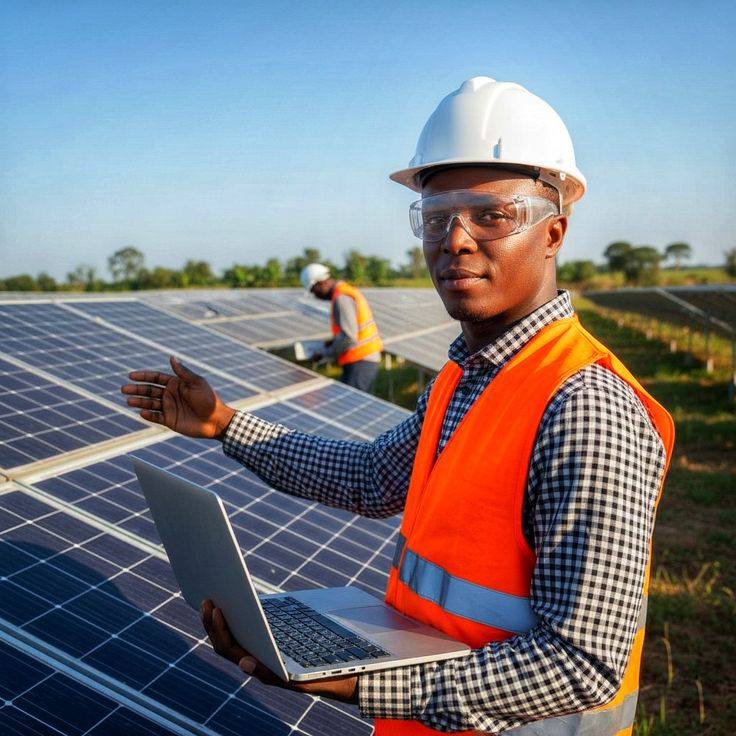
Have you checked your solar output today?
It may look different from yesterday.
Sometimes, the difference can seem surprising.
Your panels may produce more one day.
Then, production may fall the next day.
This does not always mean something is wrong.
Solar panels respond to changing conditions.
Sunlight intensity can change throughout the day.
Weather conditions can also affect production.
Even temperature can influence panel performance.
Therefore, daily solar output will rarely stay identical.
What matters is understanding the changes.
You should know what causes normal fluctuations.
You should also recognize unusual production drops.
This helps you monitor your system properly.
It can also help you spot problems early.
At Jeho Ashar Energy, we provide complete solar solutions.
Our range includes premium panels, hybrid inverters, lithium batteries, cables, and protection devices.
Explore more solutions at https://www.abujasolar.com.
What Does Solar Output Mean?
Solar output refers to the electricity your system produces.
Your inverter usually displays this production.
Monitoring platforms may show it differently.
Some systems display power in kilowatts.
Others track energy produced in kilowatt-hours.
These two measurements are not identical.
Power shows what your system produces now.
Energy shows what it produces over time.
For example, your system may produce 5kW.
That is the current production level.
However, it may produce 25kWh throughout the day.
The total depends on sunlight and operating hours.
Therefore, daily output should be viewed over time.
A single reading does not tell everything.
Why Your Solar Output Changes Daily
1. Sunlight Intensity Changes
Sunlight is never exactly the same daily.
Clouds can reduce the available sunlight.
Haze can also affect solar radiation.
Even thin clouds can reduce production.
A bright morning may produce strong output.
However, heavy clouds can lower production later.
The panels still produce electricity under clouds.
They simply receive less available solar energy.
Consequently, cloudy days usually produce less energy.
This is normal solar system behavior.
2. Weather Conditions Affect Production
Weather plays a major role in solar generation.
Rainy days often have lower solar production.
Overcast conditions can reduce output considerably.
Dusty or hazy conditions can also matter.
However, rain itself is not always the problem.
The main issue is reduced sunlight reaching panels.
Heavy cloud cover blocks part of that sunlight.
Therefore, comparing sunny and cloudy days can mislead.
Always consider the weather when reviewing production.
3. Temperature Can Affect Panel Output
Solar panels need sunlight to generate electricity.
However, higher temperatures can affect their performance.
Panel ratings use standard testing conditions.
Real outdoor conditions can differ significantly.
A panel can become much hotter than air temperature.
As panel temperature rises, electrical output can decrease.
This effect is normal for photovoltaic modules.
Therefore, very hot conditions can affect production.
This does not mean sunlight is bad.
Strong sunlight still provides valuable solar energy.
The panel simply operates under different temperatures.
Good panel design can help reduce these losses.
Temperature performance is therefore worth considering when choosing panels.
4. The Sun Changes Position
The sun does not remain at one angle.
Its position changes throughout the day.
Panel orientation affects how much sunlight reaches the surface.
Production usually rises after sunrise.
It reaches stronger levels around peak sunlight hours.
Then, output gradually falls toward sunset.
This creates the familiar production curve.
The curve changes slightly every day.
Seasonal changes also affect the sun’s position.
Therefore, production patterns can shift throughout the year.
5. Shading Can Reduce Solar Output
Shading is another important factor.
A small shadow can affect panel performance.
Trees, buildings, poles, and nearby structures can create shade.
The problem can become worse as shadows move.
Morning shading may disappear by midday.
Afternoon shading may appear later.
Therefore, your system may produce normally at noon.
Yet, morning production may remain unusually low.
New construction can also create unexpected shading.
Tree growth may gradually cause similar problems.
Watch for new sources of shade around your panels.
6. Dust and Dirt Can Reduce Production
Solar panels are exposed to outdoor conditions.
Dust can settle on their surfaces.
Leaves and other debris can also accumulate.
This reduces the sunlight reaching the cells.
Consequently, energy production may gradually decline.
Dust can become particularly noticeable in dusty environments.
Construction areas can also create more panel soiling.
However, cleaning should be done carefully.
Avoid harsh tools that could damage panel surfaces.
Follow suitable maintenance practices for your installation.
7. Panel Temperature Varies During The Day
Panel temperature changes continuously.
It can rise quickly under strong sunlight.
It can also fall after sunset.
Therefore, panel performance can change throughout the day.
This is one reason output is not constant.
For example, your panels may produce strong power earlier.
Later, panel temperature may become much higher.
Output can then change despite strong sunlight.
This is normal behavior for photovoltaic technology.
8. Your Solar Load Can Affect What You See
Your inverter may display several power values.
Some readings show solar production directly.
Others show power being used by appliances.
This can cause confusion when monitoring your system.
For example, solar production may remain strong.
Yet, battery charging power may appear lower.
That can happen when your home uses solar energy directly.
The remaining power may then charge the battery.
For example:
- Solar production: 6kW
- Home load: 3kW
- Battery charging: about 3kW
The exact figures can vary by system.
However, the principle remains the same.
Therefore, check production and consumption together.
9. Battery Charging Can Change Solar Power Flow
Your battery does not always accept the same power.
Charging behavior can change throughout the day.
When the battery is low, charging may be higher.
As the battery approaches full charge, charging can reduce.
The inverter may then direct more energy elsewhere.
Therefore, lower battery charging does not always mean low solar production.
Always check the actual PV production reading.
Do not judge panel performance from battery charging alone.
10. Inverter Limits Can Affect Output
Your solar panels may produce more potential power.
However, your inverter has operating limits.
For example, a system may have substantial panel capacity.
The inverter may limit how much power it processes.
This can happen during strong sunlight conditions.
The system may reach its designed operating limit.
Proper system design accounts for these differences.
Panel capacity and inverter capacity must work together.
Therefore, higher panel capacity does not guarantee unlimited output.
Normal Daily Changes vs Warning Signs
Some production changes are completely normal.
Others may indicate a technical problem.
Normal changes include:
- Lower output on cloudy days.
- Higher output during strong sunlight.
- Seasonal production differences.
- Gradual morning increases.
- Gradual evening decreases.
- Changes caused by panel temperature.
However, sudden unexplained drops deserve attention.
Watch for:
- One panel producing much less.
- Sudden production loss on sunny days.
- Repeated low output under clear skies.
- Frequent inverter faults.
- Unusual voltage readings.
- Persistent shading.
- Damaged cables or connectors.
- Sudden production changes after installation work.
These signs may require professional inspection.
A Simple Example
Imagine your system produces 28kWh on Monday.
Tuesday is bright and mostly clear.
Your system produces 30kWh.
Wednesday becomes heavily overcast.
Production falls to 18kWh.
Thursday returns to sunny conditions.
Production rises again to 29kWh.
This does not necessarily indicate a fault.
The weather explains much of the difference.
Now consider another situation.
Your system normally produces 30kWh on sunny days.
It suddenly produces only 12kWh.
The weather remains bright throughout the day.
That change deserves investigation.
Something may be affecting the system.
How To Monitor Solar Output Properly
Do not compare random readings.
Use consistent monitoring habits instead.
1. Compare Similar Days
Compare sunny days with sunny days.
Do the same with cloudy days.
2. Check Daily Energy
Look at total daily production.
Do not rely only on instant power.
3. Watch Long-Term Trends
Track production over several weeks.
This gives a clearer picture.
4. Check Your Weather
Record major weather conditions.
Cloud cover can explain many changes.
5. Check For Shading
Look around your installation periodically.
New shadows can develop over time.
6. Monitor Inverter Alerts
Pay attention to warning messages.
Repeated errors should not be ignored.
How To Improve Consistent Solar Production
Daily output will always vary somewhat.
However, good maintenance can reduce avoidable losses.
Consider these practices:
- Keep panels reasonably clean.
- Check for new shading.
- Monitor inverter performance.
- Inspect visible cables and connectors.
- Use quality solar panels.
- Ensure proper panel installation.
- Maintain suitable ventilation around equipment.
- Review production trends regularly.
- Address repeated inverter warnings.
- Schedule professional inspections when necessary.
Good system design also matters greatly.
Quality components can support reliable long-term performance.
Why Quality Panels Matter
Not every panel performs identically.
Panel technology affects energy generation and reliability.
Modern premium panels can offer strong efficiency.
Some also perform well under low-light conditions.
Temperature characteristics can also differ between models.
For example, N-type technologies can provide strong performance.
Bifacial panels can also capture additional available light.
However, installation conditions still matter.
The best panel depends on your system requirements.
It should also match your available installation space.
At Jeho Ashar Energy, we supply premium solar panels.
We also provide hybrid and high-voltage inverter solutions.
Our lithium batteries support different backup requirements.
The right combination creates a better-performing system.
When Should You Investigate a Drop?
Do not worry about every small change.
Daily solar output naturally moves up and down.
However, investigate persistent unusual drops.
This is especially important during clear weather.
You should consider professional inspection when:
- Output remains unusually low.
- Production suddenly falls.
- One string performs poorly.
- Inverter alarms continue.
- Panel damage is visible.
- Connections appear damaged.
- Production declines without weather changes.
Early investigation can prevent larger problems.
It can also protect long-term system performance.
Conclusion
Why your solar output changes daily has many answers.
Weather is one of the biggest factors.
Sunlight intensity also changes throughout the day.
Temperature, shading, and dust can affect production.
Your inverter and battery can also influence readings.
However, not every change indicates a fault.
The important thing is identifying unusual patterns.
Therefore, monitor your system consistently.
Compare similar days and production periods.
Also consider weather and household consumption.
A properly maintained system should still perform reliably.
Daily variation is simply part of solar generation.
Understanding that variation helps you manage expectations.
Final Thought
Do not judge your solar system from one day.
Look for patterns instead of isolated readings.
When output changes, ask what changed around it.
Good monitoring turns confusing numbers into useful information.
It also helps you identify problems before they grow.
Learn more about quality solar solutions at https://www.abujasolar.com